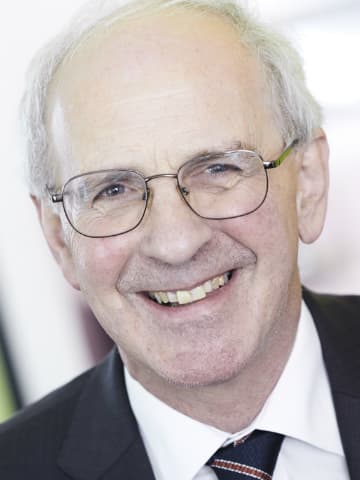
Original Broadcast: Thought for the Week

The news that Anthropic and Elon Musk have committed to make a start in sharing their wealth creation is a significant step towards 'Stock for Data & Creativity'. It's been followed by a frank recognition of the challenge ahead from Bill Gates, founder of Microsoft. However, he and Anthropic are basing their ideas on too much intermediation, while Elon Musk is just focused on American recipients. Egalitarian capitalism is a concept designed for global implementation, and it's centred on individual ownership which nurtures individual responsibility for our world. And, by removing economic stress, it will enable people to prioritise their care for the environment and look ahead to a safer and more stable world for our children and grandchildren. Background music: 'Everything Has a Beginning' by Joel Cummins
Published:
Original Broadcast: Thought for the Week
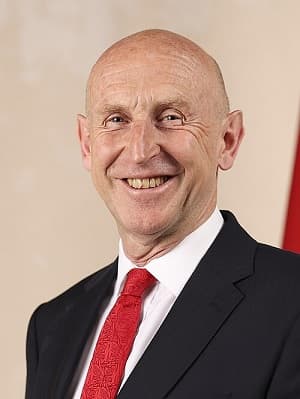
With the summer holidays drawing to a close in the next few days, the new team at HM Treasury will be busy looking at fresh ideas for the Budget on 28th October. The challenging economic situation calls for a fresh look at some of the underlying strategies which have driven debt so high over the past half-century. The really big problem is the extent to which 'universal, free-at-the-point-use' health care has caused deep generational unfairness; that, combined with the triple lock and unfunded state pensions, place real burdens on young generations. It's time for a major change in the underlying logic. Background music: 'People Watching' by Sir Cubworth
Published:
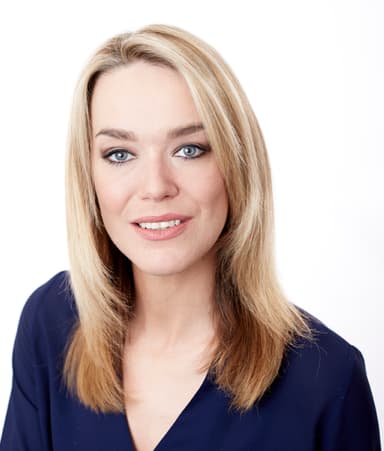
Original Broadcast: This is Money
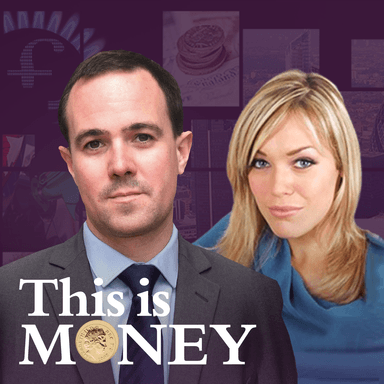
Inflation is back on the rise again, and it is forecast to keep going up. What does this mean for our finances and how bad are things going to get? Meanwhile, the Budget is looming and, while it's certainly been a much quiter build-up this year, can we be sure that there's no bad news lurking? Georgie Frost, Rache Rickard Straus and Simon Lambert unpick what's going on and look at where we could end up next. Plus, are we seeing rent controls by the back door, how often should you be winning the Premium Bonds, and what are your Budget moans? Hosts — Georgie Frost, Simon Lambert, Lee Boyce, and Helen Crane
Guests: Helen Crane
Published:
Original Broadcast: This is Money
Saving in a self-invested personal pension is a great way to create a side pot from your workplace pension or to build a retirement fund if you are self-employed. On this bonus episode of This is Money, Simon Lambert is joined by Trading 212's chief operating officer, George Mantilas, to discuss everything you need to know about investing in a SIPP. From how to get easily get started, to what you can do to improve your pension saving and keep fees low, they discuss SIPP essentials. These include the benefits of a SIPP, how they work, why people invest in SIPP as well as a work pension, and why investing in a SIPP matters. Also, do fees matter as much as what you invest in?
Guests: George Mantilas
Published:
Original Broadcast: Motley Fool Show
Is the AI boom running out of steam, or is the market simply taking a breather? Travis Hoium, Lou Whiteman, and Jason Hall discuss growing concerns over AI spending, SpaceX's ambitious expansion plans, and signs of weakness in the American consumer. The team also makes bold predictions about the future of AI, Apple, Rocket Lab, and Netflix before highlighting two stocks on their radar. Travis Hoium, Lou Whiteman, and Jason Hall discuss AI bubble fears, SpaceX's spending ambitions, consumer spending weakness, over/under, Netflix's growth challenges and stocks on our radar. Companies discussed: Meta Platforms (META), SpaceX (SPCX), Alphabet (GOOGL), Microsoft (MSFT), Amazon (AMZN), Tesla (TSLA), General Motors (GM), Deckers Outdoor (DECK), Nike (NKE), TJX Companies (TJX), Meritage Homes (MTH), Rocket Lab (RKLB), Apple (AAPL), Netflix (NFLX), Intuitive Surgical (ISRG), MSCI (MSCI). Host — Travis Hoium; Guests — Lou Whiteman, Jason Hall.
Guests: Lou Whiteman,Jason Hall
Published:
Original Broadcast: Motley Fool Show
Netflix is showing signs of maturity as growth slows, but is its valuation becoming attractive? SpaceX reported explosive revenue growth, and Elon Musk is projecting a staggering $1 trillion annual revenue run rate by the end of 2027. Travis Hoium, Lou Whiteman, and Jon Quast break down SpaceX’s transformation into an AI powerhouse, the risks of massive data centre investments, and a potential merger with Tesla. Travis Hoium, Lou Whiteman, and Jon Quast discuss Netflix’s slowing growth, streaming advertising opportunities, SpaceX’s AI Transformation, Musk’s trillion-dollar ambitions, AI infrastructure risks, and Tesla — SpaceX merger. Companies discussed: Netflix (NFLX), Apple (AAPL), Alphabet (GOOGL), Disney (DIS), SpaceX (SPCX), Tesla (TSLA), T-Mobile (TMUS), Cloudflare (NET), Amazon (AMZN), Meta Platforms (META), Vertiv (VRT), Nvidia (NVDA). Host — Travis Hoium. Guests — Lou Whiteman, Jon Quast.
Guests: Lou Whiteman,Jon Quast
Published:
Original Broadcast: Modern Mindset
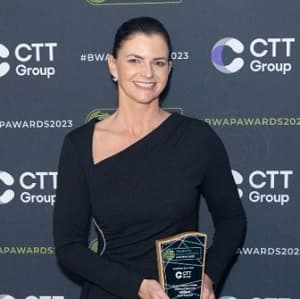
New research from the law firm Simpler Law has shown that there’s been an almost 300% increase in adults under the age of 34 having a will written for them so far this year. It paints quite a stark picture, where a lot of young people are preparing their family and their assets in the event of the worst-case scenario — so why is this happening? Rory McGowan is joined by Helen Claydon, the Chief Legal Officer at Simpler Law, who have released this research in October '26.
Published:
Original Broadcast: Gadgets and Gizmos

Steve Caplin explains that the world is slowing down and that there will be a leap hour to solve the problem – in about 1,000 years. The new Tesla has a model that will flip the car as it jumps over a truck. A planned space mission to our nearest star will take 80,000 years. A crowd-funded AI screwdriver that has 52 bits sounds very useful but is also very pricy. After a container ship in the Strait of Hormuz hit a mine, fishermen have been hauling in new iPhones. Just Eat has had to halt AI providing images for food after it bizarrely misinterpreted items like "breakfast soda". However, AI has managed to crack the code Napoleon used in a letter to his generals in 1809.
Guests: Steve Caplin
Published:
Original Broadcast: The Business Of Film

James Cameron-Wilson was kept on the edge of his seat by the survival film #7 Whalefall. The tale of a scuba diver swallowed by a whale is skilfully realised with amazing effects and sound helping to make a claustrophobic thriller. James had a whale of a time! He was even more impressed by Apple TV's true tale of Tenzing, the incredible but overlooked mountaineer. This is a terrifying tale of man vs. nature which is also a poetic study with amazing cinematography. The only complaint in an otherwise flawless movie concerns the occasionally intrusive music. James was also taken with Ben Affleck's Animals on Netflix, which Affleck also co-wrote and stars in. It's an accomplished thriller, the actor's 6th film as director. It's a polished, multi-layered drama with many surprises.
Guests: James Cameron-Wilson
Published:
Original Broadcast: Thought for the Week

40th anniversary: in October 1986 the City of London underwent a total transformation in the 'Big Bang', leading to twenty years of dynamic growth which ended in the 2008/9 financial crash, largely as a result of dual capacity and the inability of financial institutions to cope with their conflicts of interest. Today's challenges of Private Equity and the substantial and swiftly growing influence of 'quant' funds are generating a challenge every bit as significant as dual capacity — we need a long-term strategy. Background music: 'Metamorphosis' by Quincas Moreira
Published:
Original Broadcast: This is Money
On this special This is Money episode, to celebrate his 500th column as our retirement agony uncle, Steve Webb is back to answer your pension questions. The former pensions minister joins Georgie Frost and Simon Lambert to talk through what he has learnt over those 500 columns and reply to the questions he has been sent in, specially for this episode. Time stages: 01:54 – the £118,000 state pension underpayment that exposed a huge scandal; 05:01 – Inheritance tax: what's changing for pensions in April 2027? 07:39 – Will final salary pensions be caught by inheritance tax? 09:02 – How to make life easier for loved ones when you die; 10:09 – Can you give money to relatives' pensions without paying inheritance tax? 12:07 – Gifting from surplus income: What records do you need? 13:47 – Can you access your pension at 55 without triggering a tax trap? 15:53 – Why is the private pension access age rising to 57? 19:19 – Tax-free lump sums: Can you take another 25% if your investments grow? 23:36 – Why is the state pension taxable when other benefits aren't? 30:54 – Is deferring your state pension for nine years a costly mistake? 33:31 – The McCloud ruling: why are public sector pensions still delayed? 36:47 – What would Steve Webb change about the pension system? 38:37 – The biggest pension mistake people make; 39:39 – Are you missing out on a better workplace pension? 41:19 – Why checking your pension paperwork could save you thousands.
Guests: Sir Steve Webb
Published:
Original Broadcast: Motley Fool Show
Apple is making a new push into smart homes, but will consumers pay premium prices for products they can already get elsewhere? ASML’s latest earnings highlight booming AI chip demand and the limitations of its manufacturing capacity. Meanwhile, luxury giants like LVMH, Hermès, and Estée Lauder are seeing their stocks plunge as Chinese demand weakens and aspirational shoppers pull back. Travis Hoium, Lou Whiteman, and Rachel Warren discuss Apple’s Smart Home push, the Premium Pricing problem, ASML’s Semiconductor Monopoly, AI demand and valuations, China’s luxury slowdown and luxury stocks on sale. Companies discussed: Apple (AAPL), Amazon (AMZN), Alphabet (GOOGL), Schneider Electric (SU.PA), LG Electronics (066570.KS), ASML (ASML), Nvidia (NVDA), Estée Lauder (EL), Hermès (RMS.PA), LVMH (MC.PA), Kering (KER.PA), Burberry (BRBY.L). Host — Travis Hoium; Guests — Lou Whiteman, Rachel Warren.
Guests: Lou Whiteman,Rachel Warren
Published:
