
Original Broadcast: This is Money
With just one month to go before the Budget, Georgie Frost, Simon Lambert and Lee Boyce discuss what you might consider doing to prepare for it? Give money away, use allowances (CGT, ISA, pension contributions) to the full, or leave the country? The team reminds us that 'don't panic' is often the best way forward. There's also a couple of interesting readers' questions, about ignoring a father's will and re-marriage to save tax.
Published:
Original Broadcast: This is Money
A bad news Budget looks to be on the cards after Labour continued to pour cold water on optimism following its election victory. Prime Minister Keir Starmer delivered a gloomy speech saying the Budget was going to be painful, hot on the heels of Chancellor Rachel Reeves' own gloom-mongering. But having made a promise not to raise the rates of income tax, national insurance, VAT and corporation tax, where will the Government try to raise cash? Starmer said tax rises would target those with the 'broadest shoulders' but who are they — and are there really enough of the very wealthy to target or will the burden be more likely to fall once again on those in the rich middle? We look at what taxes could rise and what a capital gains tax, pension, inheritance or other raid could mean for people. Plus, Britain's biggest mortgage lender Halifax is upping what it will lend first-time buyers, Crane goes on the case of an Evri bungle and asks: shouldn't you be within your rights to expect a parcel to arrive? And finally, with the Oasis ticket scramble in full effect and ticket prices sky high, can you protect against a potential Gallagher brother blow up or anything else that would stop you going? (If, that is, you can get tickets in the first place, of course!).
Guests: Helen Crane
Published:
Original Broadcast: This is Money
Last week, the consumer prices index measure of inflation nudged higher to 2.2%. But what does this mean for future base rate decisions — and then in turn, mortgage rates and savings rates? Lee Boyce and Georgie Frost discuss the latest inflation figures and what the rest of the year has in store for the economy. Meanwhile, experts predict a busier housing market this autumn - but what makes them so sure? And watch out if you plan on taking your kids out of school during term time — you could face big fines, with the first change to the system since 2013. Is it fair that parents get fined for taking children on holidays and should there be a better system devised? We look at the supermarket winners and losers over the last decade — just how bad have things been for ASDA. And our reporter Angharad Carrick takes a visit to west London Tesco to test its new anti-shoplifting measures. Is it any good? We also run the rule over Aliexpress... and the bargain items that are almost too good to be true.
Guests: Angharad Carrick
Published:

Original Broadcast: Modern Mindset
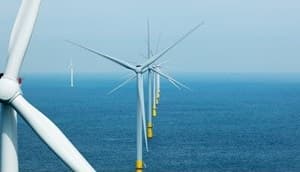
Adam Cox is joined by Giles Dickson, the CEO of WindEurope. Giles talks to Adam all about the current state of wind energy in the UK. With a new government at the helm, Giles also discusses what the future could hold for wind energy. https://windeurope.org/
Guests: Giles Dickson
Published:


It's been a long wait for summer this year, and we need to search for glimmers of hope as we approach the new political/economic/academic year. One such is the significant rise in Maths 'A' level entries, which will help young people find good careers. Another is the 0.25% reduction in interest rates: a cautious and close-run decision in times of considerable turbulence. Real interest rates are still 3%, so there's a long way to go. If the current rash of street riots allow it, we need to use the few weeks of summer calm to reflect on the big issues holding us back, including how to achieve a world without poverty. Background music: 'Solar Power' by Ashley Shadow
Published:
Original Broadcast: This is Money
Some relief for borrowers as interest rates start to edge down — has the economy turned a corner? Georgie Frost, Simon Lambert and Lee Boyce discuss this and the Chancellor's speech on Monday 29 July, looking ahead to the Budget in October. Also — are broadband and phone prices set to soar again?
Published:
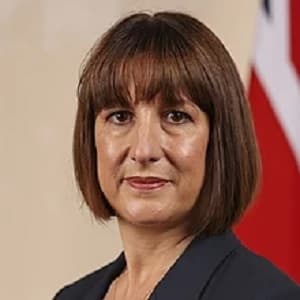
The new Chancellor of the Exchequer's speech to the House of Commons on 29th July 2024, unabridged and as delivered.
Published:
Original Broadcast: Thought for the Week

The scale of the nominal national debt is staggering, but when you add in unfunded pension schemes (state and public sector) and HM Treasury indemnities to the Bank of England it places a heavy load indeed on the new Chancellor. Her early career at the Bank of England and HBOS will have prepared Rachel Reeves well to tackle this challenge in her new role as Chancellor of the Exchequer; and she will be well aware of the heavy burden being placed on younger generations. Background music: 'Burden Laid Down' by The Westerlies
Published:
Original Broadcast: This is Money
All change, please. In a radical reshaping of the political landscape, Britain has elected a Labour government for the first time in 14 years. New prime minister Keir Starmer and Chancellor Rachel Reeves have made bold promises of revival, growth and wealth creation. But many fear that Britain’s troubled public finances will also mean that promises not to raise taxes will prove empty. So, what has Labour said it will do, what important things have been left unsaid, what will it mean for the economy and your finances and is there a path to prosperity that doesn’t involve more tax pain? On this special election podcast, Georgie Frost, Helen Crane, Lee Boyce and Simon Lambert look at what Labour’s election victory could mean for our money. The team discuss the manifesto promises on the economy and growth and at how robust the no tax rise pledges are. Can Labour’s housebuilding plans and planning shake up deliver more homes? What are its other plans to get growth going? Plus, the team look at the Tories’ 14 years in charge of the economy and the positives that can be drawn amongst the turbulence. And finally, what have we got to be optimistic about as we move into the next chapter of British life?
Guests: Helen Crane
Published:
Original Broadcast: Thought for the Week
Most of us believe in personal freedom within a fairer society, but that combination isn't currently on offer from any of the political parties seeking your vote. It is, however possible — but you need to start young. Reducing the voting age to 16 might help a bit, but a more egalitarian way forward for capitalism calls for starter capital accounts and incentivised learning for disadvantaged young people. Then, you need to do something about wealth concentration brought about by the tech giants. Background music: 'Freedom' by Dan Lebowitz
Published:
