
Original Broadcast: Thought for the Week

Labour MPs' celebration of the Chancellor's abolition of the 2-child welfare benefit cap in last week's Budget statement completely eclipsed the outstanding need for a comprehensive strategy to address the economic and familial stresses impacting children, adolescents and young adults: so much worse than a few decades ago. We focus on three specifics in this commentary: the continuing denial of Government to deliver Child Trust Fund money to low-income young adults unaware of their money; the punishing burden of the student loan system, and the instability and insecurity caused by a society which has lost its moral compass. Background music: 'Generations Away' by Unicorn Heads
Published:
Original Broadcast: Thought for the Week
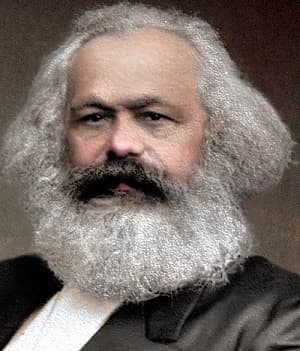
Universal publicly-funded welfare, including health care and education, has proved a very expensive Marxist experiment in western democracies. Far from resolving the challenge of eliminating poverty and disadvantage, it has loaded a huge debt burden on public finances which Rachel Reeves needs to address in the forthcoming UK Budget. But there is no point in loading still more income and capital taxes on the wealthy: they'll just leave the country in ever greater numbers, and economic growth — and tax revenue — will fall as a result. A much more practical solution is that people who can afford to pay for these services should do so, so that Government can focus financial support where it's most needed. Background music: 'The New Order' by Aaron Kenny
Published:
Original Broadcast: Thought for the Week

Politicians of all parties seem to think that we can both cut immigration and achieve significantly higher economic growth, notwithstanding the fact that there would be no population growth from which it would come: artificial growth from short-term policies such as public sector 'investment' stimulation is not the answer. After 75 years during which the world's human population has quadrupled, an increasing number of countries are facing this challenge. We now need more focus on GDP per capita, less public spending and debt, and more focus on inter-generational rebalancing. Background music: 'Something Is Wrong' by Sir Cubworth
Published:
Original Broadcast: Thought for the Week
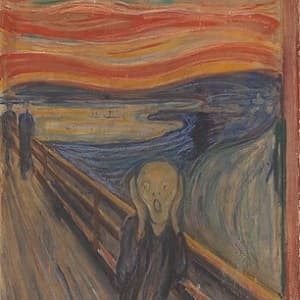
If buyers of government bonds fear potential default, they require significantly higher yields to offset that risk. For bonds already issued, that means much lower prices — and big losses for holders, especially if the bonds are long-dated. For new bonds being issued, governments have to pay a much higher interest rate, significantly increasing their current deficit and requiring still more taxation. Governments can ask the International Monetary Fund to bail them out; if the IMF can help, it imposes stringent conditions on their economic and fiscal policies. The world has not been faced with multiple and concurrent defaults to date, and no-one knows how such a situation can be resolved.The United States, United Kingdom and France are approaching this black hole now, and need to make some urgent changes in policies to avoid it. Background music: 'Dark Alley Deals' by Aaron Kenny
Published:
Original Broadcast: Thought for the Week
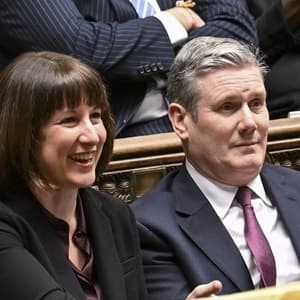
A comment article in The Times last Friday was headed, 'Starmer and Reeves must change to survive' — but which way? The backbench Labour MP uprising called for even more State spending, but the bond market and the July 22nd ‘Cost of Government Day’ say no — the public sector is already much too big. Of more concern is their preference to go for the 'stick' of welfare reduction rather than the 'carrot' of empowerment through individual ownership and freedom for all, drawing a sharp contrast between this Labour Government and that of Tony Blair and Gordon Brown two decades ago. Background music: 'Hopeful Freedom' by Asher Fulero Image: happier days, from Wikimedia
Published:
Original Broadcast: Thought for the Week

The Chancellor was like a person sitting on the cliff-edge of colossal public debt last week, convinced that her massive 'investment' commitments can overlook the void below. It appears that economic stimulation is the only game in town for the British economy, and even that seems to avoid joined-up thinking in some key areas. Background music: 'Ether Oar' by The Whole Other
Published:

On 11th June UK Chancellor Rachel Reeves presents her Spending Review against the backdrop of a gargantuan public debt liability which is costing the UK taxpayer £111 billion a year in interest. Further tax rises have been ruled out, so she needs to identify achievable, structural reductions in spending. Elon Musk thought he'd done just that as head of the U.S. Department of Government Efficiency (DOGE), but only a small fraction of his planned reductions were achieved. In the UK at least we can break away from welfare universality — but will she do it? She's tried taxation and now she has to tackle spending, but the real elephant in the room is debt: all £2.7 trillion of it. Background music: 'Dark Alley Deals' by Aaron Kenny
Published:
Original Broadcast: Thought for the Week

Outcome assessment is vital for all new initiatives, particularly political, but traditional academic research, which is sequential in character, is not good at responding to the speed of change in our modern world. This is particularly the case in tackling Child Poverty, for which a UK-Government Task Force is due to report later this Spring. If we are to break the cycle of deprivation with inter-generational rebalancing, we need a new sense of dynamism and responsiveness. Background music: 'Peony Morning' by TrackTribe
Published:
Original Broadcast: Thought for the Week

When Clement Attlee introduced welfare universality to post-war Britain, he was aiming for a more egalitarian society. Seventy-five years on we can see not only that it has not been achieved, but also that it has nearly bankrupted the public finances: a major task for UK Chancellor Rachel Reeves to tackle in her Spring Statement. Targeting support for those most in need with the help of philanthropy will be a key part of replacing 'egalitarian socialism' with egalitarian capitalism, enabling those with a social conscience to concentrate support and encouragement where it's needed, rather than providing publicly-funded services 'free at the point of use' for everyone. Background music: 'Everything Has a Beginning' by Joel Cummins Image source: Wikipedia
Published:

The past year has seen a litany of climate change disasters of which the wildfires in Los Angeles are the latest. Yet Americans still supported Trump's call to 'drill, baby, drill' in the presidential election. This is just the latest disaster that financial markets have to contend with. How much pressure can the insurance and investment markets take? The one thing that we know for sure is that, while the American people may have locked in their choice for the next four years, there's no such insurance for the bond market — it can strike at any time. Background music: 'Trap Unboxing' by Jimmy Fontanez_Doug Maxwell
Published:
