
Original Broadcast: Thought for the Week
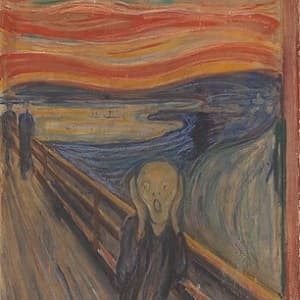
If buyers of government bonds fear potential default, they require significantly higher yields to offset that risk. For bonds already issued, that means much lower prices — and big losses for holders, especially if the bonds are long-dated. For new bonds being issued, governments have to pay a much higher interest rate, significantly increasing their current deficit and requiring still more taxation. Governments can ask the International Monetary Fund to bail them out; if the IMF can help, it imposes stringent conditions on their economic and fiscal policies. The world has not been faced with multiple and concurrent defaults to date, and no-one knows how such a situation can be resolved.The United States, United Kingdom and France are approaching this black hole now, and need to make some urgent changes in policies to avoid it. Background music: 'Dark Alley Deals' by Aaron Kenny
Published:

Original Broadcast: This is Money
Dubai is doing its best to draw in disillusioned young Britons, offering cut-price properties, visa incentives for entrepreneurs and of course, the prospect of paying no income tax. Footballer Rio Ferdinand and his family have even announced they are making the move — but two young families This is Money spoke to say it isn't just for sports stars and influencers. They say it's easier to start your own business, they can get petrol for 50p a litre, and send their children to private school. Helen Crane and Georgie Frost are joined by Money Mail editor and This is Money alumna and Money Mail editor Rachel Rickard-Straus to discuss whether the money incentives would ever be enough for them to do the same. It comes as yet another planned tax hike is being rumoured ahead of Labour's Autumn Budget. This time, landlords are being threatened with paying National Insurance on the income they make from rent — but who will the tax hike really hurt? Elsewhere, our savings expert Sylvia Morris is convinced NS&I will slash the rate on its ever-popular Premium Bonds this October. Georgie is ditching hers, but should you do the same — and where can you get a better rate? Finally, Helen discusses helping a reader who was told she couldn't get her money back for an £883 ferry crossing her husband booked, as she had the wrong kind of death certificate.
Guests: Rachel Rickard-Straus
Published:
Original Broadcast: Motley Fool Show
Lower interest rates are more than a macro headline — for some businesses, what the Federal Reserve decides to do plays an integral role for both management and investors. Analysts Emily Flippen, Jason Hall, and David Meier debate the stocks most likely to be impacted after Federal Reserve Chair Jerome Powell’s speech at Jackson Hole. Companies discussed: WD, RKT, GRBK, O, PYPL, ABNB, PAYC, TSLA; Host - Emily Flippen; Guests -Jason Hall, David Meier.
Guests: Jason Hall,David Meier
Published:
Original Broadcast: This is Money
The Bank of England has cut interest rates again, but this time, the decision wasn’t straightforward. Georgie Frost, Lee Boyce and Helen Crane ask what the division in the Monetary Policy Committee tells us about the state of the economy right now, and what the cut means for our money. We also talk about plans to hit those in wealthier areas with bigger council tax bills. Why is the current system so unequal, and how could your area be affected? Helen discusses a water company who told an elderly couple they needed their pipework replacing at a cost of thousands — when in reality, all they needed was a new water meter (which is given away for free). Finally, Lee explains who can claim from the car finance scandal - and what to do if you can't find the paperwork.
Guests: Helen Crane
Published:
Original Broadcast: Thought for the Week
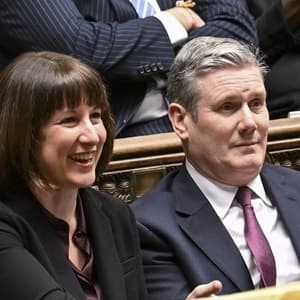
A comment article in The Times last Friday was headed, 'Starmer and Reeves must change to survive' — but which way? The backbench Labour MP uprising called for even more State spending, but the bond market and the July 22nd ‘Cost of Government Day’ say no — the public sector is already much too big. Of more concern is their preference to go for the 'stick' of welfare reduction rather than the 'carrot' of empowerment through individual ownership and freedom for all, drawing a sharp contrast between this Labour Government and that of Tony Blair and Gordon Brown two decades ago. Background music: 'Hopeful Freedom' by Asher Fulero Image: happier days, from Wikimedia
Published:
Original Broadcast: Motley Fool Show
Jobs hold steady, Cloudflare takes a stand on AI and the stocks leading us to financial freedom. Jason Moser and Andy Cross discuss the recent jobs report, what the stress test means for banks, the current state of autos, Cloudflare pushes back on AI crawlers, and stocks to celebrate financial freedom. Tickers mentioned: BAC, TSLA, F, GM, NET, NFLX, HD, WM. Host - Jason Moser; Guest - Andy Cross.
Guests: Andy Cross
Published:
Original Broadcast: The Financial Outlook for Personal Investors

With Simon Rose enjoying a well-earned break this week, we bring you CNBC's Squawk Box Europe comment on the challenges for long-dated UK bond yields following the Government's climbdown on its welfare bill, courtesy of Capital Economics.
Published:
Original Broadcast: Thought for the Week

The Chancellor was like a person sitting on the cliff-edge of colossal public debt last week, convinced that her massive 'investment' commitments can overlook the void below. It appears that economic stimulation is the only game in town for the British economy, and even that seems to avoid joined-up thinking in some key areas. Background music: 'Ether Oar' by The Whole Other
Published:
Original Broadcast: The Bigger Picture
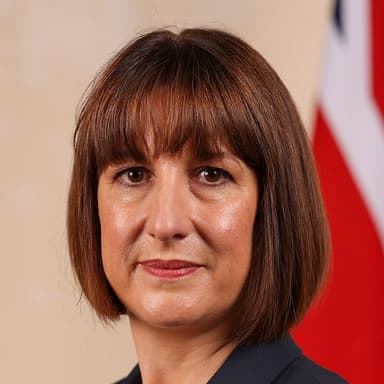
The unabridged recording of Rachel Reeves’ speech in the House of Commons on 11th June 2025.
Published:
What would you do with £208 million? Ahead of another Euromillions rollover, This is Money spoke to an adviser to those fortunate few who have scooped a jackpot to get some practical tips on what to do if you win big…just in case! Would friends and family be top of your list when it comes to how to spend it... or something else? Lee Boyce, Simon Lambert and Georgie Frost discuss. Simon turns his focus on The Big Winter Fuel u-turn and the spending review – 'pray for Rachel and all of us', he says. We borrowed too much to buy our home - what can we do about our huge mortgage? And an auction expert revealed the four types of property that savvy buyers are snapping up right now.
Published:
