
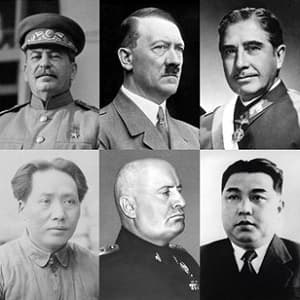
There are many different interpretations of 'authority', but the sharpest distinction is between a top-down, dictatorial style and an understanding of what 'servant leadership' means. The former disregards the need for empathy, while the latter invites real participation. But for participation to be effective it requires empowerment, which itself relies on knowledge, awareness and a sense of conscience. This is a good way forward for Artificial Intelligence, and the Bundesliga's 50+1 ownership rule shows how it can be achieved! Background music: 'Leaders' by Text Me Records, Jorge Hernandez
Published:
Original Broadcast: Thought for the Week

The origins of the looming crisis in world government bond markets started forty years ago; recent challenges such as the pandemic and Trump have turned the screw even harder, and in the United Kindom the dogged application of universal welfare certainly hasn't helped. But the current problem of over-indebtedness can be traced back to the 1980s and the introduction of dual capacity in financial markets, which gave rise to the 2008 financial crisis and the acceptance by governments of their role as a bottomless reserve. However, these governments must now undergo a mindset change from seeing themselves as the 'last chance saloon' for all crisis situations to being an effective provider of regulation, looking ahead to keep risks under control.
Published:
Original Broadcast: Thought for the Week
With the summer holidays drawing to a close in the next few days, the new team at HM Treasury will be busy looking at fresh ideas for the Budget on 28th October. The challenging economic situation calls for a fresh look at some of the underlying strategies which have driven debt so high over the past half-century. The really big problem is the extent to which 'universal, free-at-the-point-use' health care has caused deep generational unfairness; that, combined with the triple lock and unfunded state pensions, place real burdens on young generations. It's time for a major change in the underlying logic. Background music: 'People Watching' by Sir Cubworth
Published:
Original Broadcast: Thought for the Week

In response to Andy Burnham's invitation to join his cross-party working group on overhauling social care arrangements throughout the United Kingdom, Sir Ed Davey called for diversity while Kemi Badenoch said it mustn't increase public spending. However there are other deep questions to answer as well: such as how to prepare people better for old age; will they be prepared to seize the opportunity to end universality and focus on targeted support, including for health care; and whether they can bring in a new focus on inter-generational rebalancing? Background Music: 'Young And Old Know Love' by Puddle of Infinity
Published:
Original Broadcast: Thought for the Week
Thomas Jefferson's claim that all are created equal with the rights of life, liberty and the pursuit of happiness attracts lip service from politicians but not much commitment: they either want to take away liberty in the pursuit of equality, or to deny that wealth polarisation results from the black hole of economics. Will Andy Burnham also turn a Nelsonian blind eye to this challenge, allowing domestic parochialism to take precedence over the search for a new way forward where all can enjoy the benefits of individual freedom and economic empowerment — a genuinely new political and economic model? Background music: 'Hopeful Freedom' by Asher Fulero
Published:
Original Broadcast: Thought for the Week
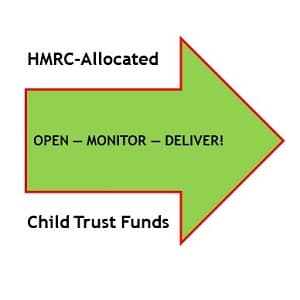
The wish to tackle inter-generational rebalancing — to break the cycle of deprivation — leads directly to establishing long-term savings accounts for disadvantaged young people: that's why the Child Trust Fund included an HMRC-allocated category for those children (mainly low-income) whose families didn't open accounts. However Government needs to not only open these accounts but also monitor and take steps to deliver them in order to ensure that these young adults actually receive the resources they need in order tob achieve their potential in adult life. A parliamentary event is taking place on 15th July, asking Andy Burnham to prioritise this. Background music: 'Not Forgotten' by Dan Lebowitz
Published:
Original Broadcast: Thought for the Week

The major economic challenges confronting humanity — including the chronic and acute polarisation of wealth — are global in character, just as the major environmental issues. However, nations are too reticent to establish effective global governance to deal with them. All the signs are that Andy Burnham will take quite the opposite approach, with his emphasis on regional devolution within the United Kingdom. This is why it is so important to build awareness and debate on the merits and methodology of a global approach to egalitarian capitalism. Background music: 'The Plan's Working' by Cooper Cannell
Published:
Original Broadcast: Thought for the Week
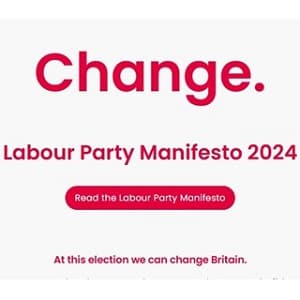
Starmer's clarion call for the 2024 General Election was 'Change', somewhat different from Tony Blair's 'Education, Education, Education'. However, in contrast to Blair's delivery in Government, Starmer has got stuck in a morass of inaction, bogged down by the crisis in public finances and an unwillingness to tackle the big issues. The biggest of these is welfare spending, major changes to which former Chancellor Sir Jeremy Hunt recognises as the only way out of this dilemma. As we said on 26th May, it's time to call 'time' on 75 years of democratic socialism (and yes, let's remember that the Conservatives tacitly went along with this also). Background music: 'Taking in The Changes' by Everet Almond
Published:
Original Broadcast: Thought for the Week

On 29 August 2023 our newsletter described the black hole of economics as its failure to recognise the opportunity to use the human life-cycle in order to empower new generations of disadvantaged young people with resources and life skills. Thanks to Cambridge University, we've now taken a major step forward with the Inter-Generational Rebalancing Conference, and it's time to plan the next stage as we move through research, education and advocacy on the journey towards implementation. Background music: 'Saving the World' by Aaron Kenny
Published:
Original Broadcast: Thought for the Week
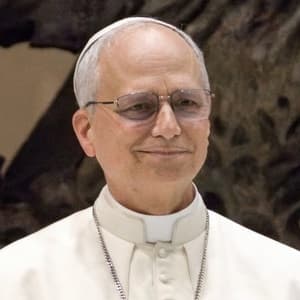
The direct nature of Pope Leo XIV's AI encyclical took some of his colleagues by surprise: as an AI expert Franciscan friar who has advised the Vatican says, ‘Papal documents usually speak in principles; this one names the structural problem — computational power is concentrated in the hands of a few private actors who answer to no democratic process’. The jury is still out on the impact of Artificial Intelligence on human employment, but a cartoon from Private Eye (see our commentary webpage) resonates closely with Standard Chartered's announcement that it will use AI to replace 'lower-value human capital', with about 7,800 back-office roles to be cut by 2030. Background music: 'The New Order' by Aaron Kenny. Image source: Wikipedia
Published:
