
Original Broadcast: Thought for the Week

Labour MPs' celebration of the Chancellor's abolition of the 2-child welfare benefit cap in last week's Budget statement completely eclipsed the outstanding need for a comprehensive strategy to address the economic and familial stresses impacting children, adolescents and young adults: so much worse than a few decades ago. We focus on three specifics in this commentary: the continuing denial of Government to deliver Child Trust Fund money to low-income young adults unaware of their money; the punishing burden of the student loan system, and the instability and insecurity caused by a society which has lost its moral compass. Background music: 'Generations Away' by Unicorn Heads
Published:

Original Broadcast: This is Money
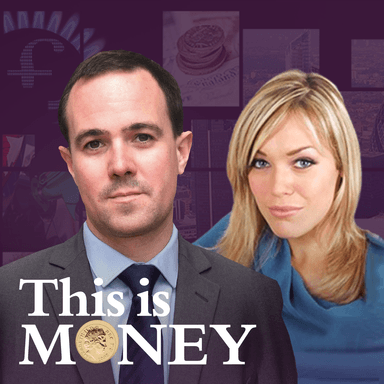
After the endless speculation, the Budget finally arrived this week. Rachel Reeves seemed happy with her statement and Sir Keir Starmer has been out singing its praises, but was the Budget a diamond in the rough or a dud? On this Budget 2025 episode, Georgie Frost, Lee Boyce and Simon Lambert dive into a Budget that many have commented is the most chaotic they can remember. After all the rumours, worries and waiting, how good or bad was it? Some of the expected financial pain didn't arrive but there were plenty of tweaks to tax our pocket and our patience. Did the Chancellor cut the right balance between getting more money in and supporting the economy, did she articulate a clear plan, or are we back to drifting about aimlessly in the tax and spending doom loop doldrums? And most importantly, what will all the measures mean for your money?
Published:
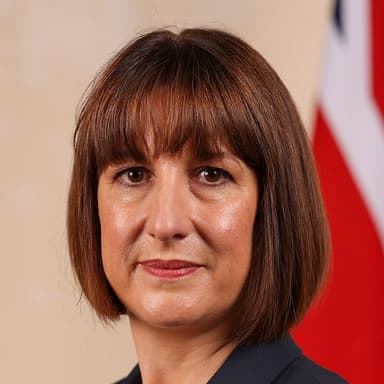
The UK Budget speech and the response from Leader of the Opposition Kemi Badenoch — and including the 'Point of Order' beforehand from Mel Stride regarding the premature release of the OBR report. This is the unabridged record without comment, and the recording runs for one hour and31 minutes.
Guests: Mel Stride,Rachel Reeves,Kemi Badenoch
Published:
Original Broadcast: Thought for the Week
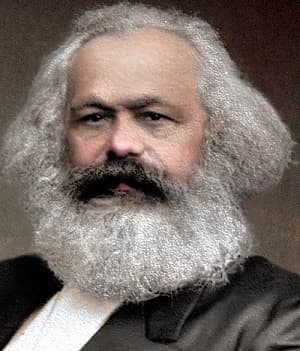
Universal publicly-funded welfare, including health care and education, has proved a very expensive Marxist experiment in western democracies. Far from resolving the challenge of eliminating poverty and disadvantage, it has loaded a huge debt burden on public finances which Rachel Reeves needs to address in the forthcoming UK Budget. But there is no point in loading still more income and capital taxes on the wealthy: they'll just leave the country in ever greater numbers, and economic growth — and tax revenue — will fall as a result. A much more practical solution is that people who can afford to pay for these services should do so, so that Government can focus financial support where it's most needed. Background music: 'The New Order' by Aaron Kenny
Published:


This episode revisits the motivations, expectations and emotions in the past — reaching right back into childhood years — which may have led to an overweight problem today, and how to let go of that baggage. It discusses a personal challenge, of course, but it could be approached as an analogy for the way that the post-war call for Attleean universal welfare has driven seven decades of excess public spending so that our country is now groaning from the weight of excess debt. It might therefore help politicians to let go of their emotional baggage and focus on a new slimline style of government which targets help and support where it's needed.
Published:
Original Broadcast: Thought for the Week
Government inaction is rooted in Civil Service reticence. It's not a recent phenomenon; it inspired 'Yes Minister' forty years ago, much to Margaret Thacher's amusement. But when it frustrates a Labour Government's abiity to deliver a key policy of its predecessor such as Child Trust Funds, that's a different matter. At the start of Boris Johnson's premiership, Dominic Cummings sought to control HM Treasury reticence by moving his team into HMT. Sir Keir Starmer appears to be doing a reverse takeover by drawing Darren Jones into No. 10 as his 'Chief Economic Secretary'. Will it work? Background music: 'People Watching' by Sir Cubworth. Image source: BBC
Published:
Original Broadcast: This is Money
It’s September, it’s back to work, back to school and back to mild chaos. This week saw a delayed Budget announced, with a raft of speculation that will only mount over what bad news that could mean, Deputy Prime Minister Angela Rayner forced to quite after underpaying stamp duty to the tune of £40,000, and long-term UK borrowing costs hit the highest level in 27 years. So, what on earth is going on? And aren’t we in the phase of the plan to get Britain’s economy back on track where things meant to be getting better not worse? Georgie Frost, Lee Boyce and Simon Lambert do their best to keep the politics out of it while discussing the Budget, the stamp duty row and the gilts wobble. They explain what this all means for the UK’s national finances and our personal finances and look at whether things could really be about to improve. Plus, should the biggest take away from the Angela Rayner stamp duty situation be that it’s a terrible tax that needs to be reformed so bills are slashed for all, as soon as possible? And finally, if your pre-booked Uber fails to turn up, you miss a flight that the airline dragged forward by half a day, and end up paying £475 for new flights, should you be able to get someone other than you to foot the bill?
Published:
Original Broadcast: Thought for the Week

Italy is not alone in experiencing a massive fall in its birth rate over recent years: so has the United Kingdom. Lowering the voting age to 16 is all very well, but it needs to be accompanied by a raft of co-ordinated policies to help young adults towards family formation and independent living. Rural villages, where house prices are so often well out of reach for young people, provide a clear litmus test of whether these policies are working. Do you remember mortgage interest rate tax relief, or when university life didn't end in heavyweight student debt? We need a coordinated policy framework to improve conditions for young adults. Background music: 'Folk Tap Harp' by Unicorn Heads
Published:
Original Broadcast: Thought for the Week
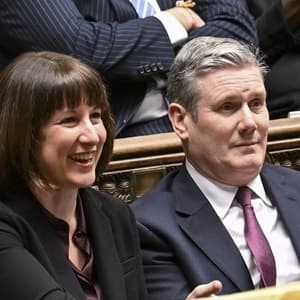
A comment article in The Times last Friday was headed, 'Starmer and Reeves must change to survive' — but which way? The backbench Labour MP uprising called for even more State spending, but the bond market and the July 22nd ‘Cost of Government Day’ say no — the public sector is already much too big. Of more concern is their preference to go for the 'stick' of welfare reduction rather than the 'carrot' of empowerment through individual ownership and freedom for all, drawing a sharp contrast between this Labour Government and that of Tony Blair and Gordon Brown two decades ago. Background music: 'Hopeful Freedom' by Asher Fulero Image: happier days, from Wikimedia
Published:

Original Broadcast: The Bigger Picture
Simon Rose is joined by political commentator and author of The Groucho Tendency blog, Mike Indian, to discuss how UK politics has got to where it is. In this episode recorded in October 2019, Simon and Mike discuss the history of the Labour Party. As the party strains to maintain its unity notwithstanding its huge majority from the 2024 election, it's interesting to reflect on its journey over past decades.
Guests: Mike Indian
Published:
