
Logic should be one of the two main drivers for politics, but it's sadly lacking in today's line-up. In 2026 we've experienced first-hand what climate change is doing to our world, but there has been a persistent move away from 'net zero' in favour of continued reliance on fossil fuels — not clever. The other main driver should be what it means to be human, but while politicians wring their hands over how to tackle excess welfare spending, there's very little targeting of real empowerment for the disadvantaged — particularly young people. Background music: 'Confliction & Catharsis' by Asher Fulero
Published:
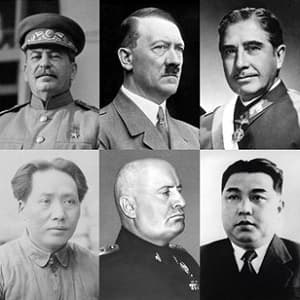
There are many different interpretations of 'authority', but the sharpest distinction is between a top-down, dictatorial style and an understanding of what 'servant leadership' means. The former disregards the need for empathy, while the latter invites real participation. But for participation to be effective it requires empowerment, which itself relies on knowledge, awareness and a sense of conscience. This is a good way forward for Artificial Intelligence, and the Bundesliga's 50+1 ownership rule shows how it can be achieved! Background music: 'Leaders' by Text Me Records, Jorge Hernandez
Published:
Original Broadcast: Thought for the Week

The spate of warnings about the existential risks for humanity as a result of insufficiently controlled Artificial Intelligence may remind some listeners of our commentary on 6th November 2023, following the first world leaders' summit on AI at Bletchley Park. The charity Share Alliance has made significant progress since then with its research into 'Stock for Data & Creativity', and we look forward to hear how these proposals for global application and new processes of shareholder participation and oversight are seen in UK Government circles. Background music: 'Digital Solitude' by Silent Partner
Published:
Original Broadcast: Thought for the Week
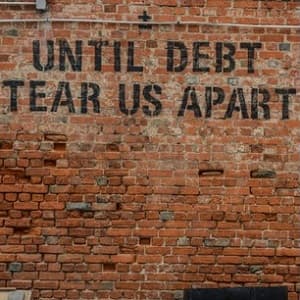
The origins of the looming crisis in world government bond markets started forty years ago; recent challenges such as the pandemic and Trump have turned the screw even harder, and in the United Kindom the dogged application of universal welfare certainly hasn't helped. But the current problem of over-indebtedness can be traced back to the 1980s and the introduction of dual capacity in financial markets, which gave rise to the 2008 financial crisis and the acceptance by governments of their role as a bottomless reserve. However, these governments must now undergo a mindset change from seeing themselves as the 'last chance saloon' for all crisis situations to being an effective provider of regulation, looking ahead to keep risks under control.
Published:
Original Broadcast: Thought for the Week

MPs, led by Alex Sobel, are calling for a national commission to prepare proposals for electoral reform; their talk is about some form of proportional representation. But democracy is faced with much bigger challenges, including short-termism, generational unfairness, and a serious lack of any global integration. Winston Churchill was right about democracy being the least worst system of government, but there are initiatives that we should take to resolve these three major challenges. Let's hope the national commission will listen. Background music: 'Journey in the New World' by Twin Musicom: this music is licensed under a Creative Commons Attribution 4.0 license. https://creativecommons.org/licenses/by/4.0/ Source: http://www.twinmusicom.org/song/258/journey-in-the-new-world Artist: http://www.twinmusicom.org
Published:
Original Broadcast: Thought for the Week
With the summer holidays drawing to a close in the next few days, the new team at HM Treasury will be busy looking at fresh ideas for the Budget on 28th October. The challenging economic situation calls for a fresh look at some of the underlying strategies which have driven debt so high over the past half-century. The really big problem is the extent to which 'universal, free-at-the-point-use' health care has caused deep generational unfairness; that, combined with the triple lock and unfunded state pensions, place real burdens on young generations. It's time for a major change in the underlying logic. Background music: 'People Watching' by Sir Cubworth
Published:

Months of drought are gradually waking us up to the fact that climate change really is a serious concern: if we're not going to stop it, then we have to take mitigation action seriously. Fresh water is our most critical natural resource: the only alternative to rainfall is desalination. Once again, democracy's great Achilles Heel of short-termism is letting us down. Politicians must accept that the era of treating fresh water as an unlimited resource is over, and new strategies must be developed to tackle the challenges ahead. Background music: 'Trickle of Water' by Underbelly & Ty Mayer.
Published:
Original Broadcast: Thought for the Week

In response to Andy Burnham's invitation to join his cross-party working group on overhauling social care arrangements throughout the United Kingdom, Sir Ed Davey called for diversity while Kemi Badenoch said it mustn't increase public spending. However there are other deep questions to answer as well: such as how to prepare people better for old age; will they be prepared to seize the opportunity to end universality and focus on targeted support, including for health care; and whether they can bring in a new focus on inter-generational rebalancing? Background Music: 'Young And Old Know Love' by Puddle of Infinity
Published:
Original Broadcast: This is Money
Is the can finally going to stop being kicked down the road on social care? Andy Burnham has promised to correct what he has called a ‘dereliction of duty’ by a generation of politicians. But how does he plan to succeed where so many before him have failed, can he pull it off and who is going to end up paying? Georgie Frost, Helen Crane and Simon Lambert discuss how to solve a problem that has defeated successive governments and created a reverse lottery where the unlucky losers can see their wealth wiped out. Meanwhile, there was no move for the Bank of England this week as interest rates were held again, despite fears that the recent spike in energy prices could prompt another inflation shock. What does it all mean for our money? Plus, would you haggle at a high street store? Our man Toby Walne did, so what happened? And finally, is Britain’s beach hut boom over?
Guests: Helen Crane
Published:
Original Broadcast: Thought for the Week

Not surprisingly, the proposal from Gary Lineker and his millionaire colleagues for a wealth tax has been met with ridicule — Robert Colvile writing in the Sunday Times says, 'The problem isn't that those who've signed the pledge are hypocrites. It's that they're idiots'. However, there is an alternative approach which could bypass gargantuan Government spending. Donating the equivalent sum to a charity of the philanthropist's choice would enable targeted support based on their analysis of need. This could provide a direct solution for the challenge of inter-generational rebalancing so that future generations are better placed to tackle national debt and future public sector payment obligations, which now exceed £9 trillion. Background music: 'Intellect' by Yung Logos
Published:
