Original Broadcast: Thought for the Week

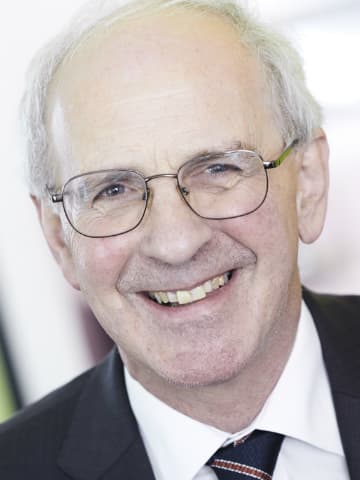
The spate of warnings about the existential risks for humanity as a result of insufficiently controlled Artificial Intelligence may remind some listeners of our commentary on 6th November 2023, following the first world leaders' summit on AI at Bletchley Park. The charity Share Alliance has made significant progress since then with its research into 'Stock for Data & Creativity', and we look forward to hear how these proposals for global application and new processes of shareholder participation and oversight are seen in UK Government circles. Background music: 'Digital Solitude' by Silent Partner
Published:
Original Broadcast: The Financial Outlook for Personal Investors

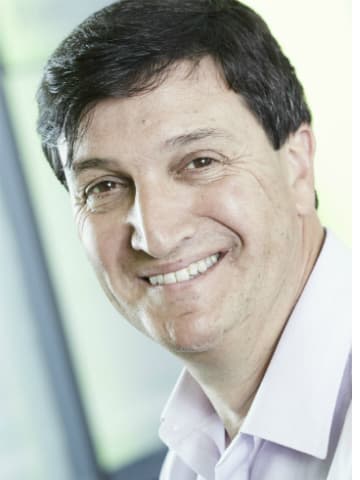
It wasn't a complete surprise, but Apple (NASDAQ: AAPL) Chief Executive Tim Cook is stepping aside and the company's current head of hardware, Jon Ternus, will be taking the helm in September. The Motley Fool team discuss Cook's legacy, the biggest challenges and opportunities for the new leader, and more. Tyler Crowe, Matt Frankel, and Jon Quast discuss Tim Cook and his accomplishments at Apple, Apple's new CEO and what his biggest challenges are, whether the S&P 500 will include SpaceX after it goes public, and AST Spacemobil and its opportunities. Companies discussed: AAPL, ASTS, RKLB. Host — Tyler Crowe; Guests — Matt Frankel, Jon Quast.
Guests: Matt Frankel,Jon Quast
Published:

Simon Rose re-visits one of his early episodes, recorded on 25th April 2016 with Share Radio's technology editor Steve Caplin. With the show opening with some very weird sounds, and continues to describe an online Thesaurus: years before the emergence of Artificial Intelligence! Then, the world's first smart clothes peg — you'll soon find out how far things have travelled over the past decade ..
Guests: Steve Caplin
Published:
Original Broadcast: Motley Fool Show

Subscription prices are going up across the board and that may be the norm for the foreseeable future. Then we discuss the state of retail spending and why Unity’s stock dropped 30% on fear AI will disrupt the company. Travis Hoium, Lou Whiteman, and Rachel Warren discuss Spotify and subscription price increases, retail sales, and Unity’s 30% haircut. Companies discussed: Spotify (SPOT), Netflix (NFLX), Disney (DIS), Unity (U). Host — Travis Hoium; Guests — Lou Whiteman, Rachel Warren.
Guests: Lou Whiteman,Rachel Warren
Published:

A new study from cybersecurity company Surfshark has found that 2025 really was a bad year for data leaks. The UK is now 6th in the list of most affected nations globally, indicating a need for better internet safety. Joining Rory McGowan to discuss this further is Dr Luis Costa from Surfshark.
Guests: Dr. Luis Costa
Published:
Original Broadcast: Thought for the Week

Universal Basic Income is frequently cited as the way to cope with the growing spectre of AI-driven mass unemployment; but there are few, if any, workable ideas on how to fund such welfare subservience. Universal participation would not only enable all to share in tech wealth creation, but also allow tech companies to benefit from people's involvement. Background music: 'Forever Yours' by Wayne Jones
Published:

Rory McGowan is joined by Mary Hubbard, executive director of the first website created, WordPress, to answer these questions: Tell us more about the first website created? Why do websites still matter in an age dominated by apps and closed platforms? How have user expectations of websites changed over the last decade? What needs to happen to ensure the web remains open for the next 35 years? Where can listeners go for more information on this?
Guests: Mary Hubbard
Published:
Original Broadcast: Gadgets and Gizmos

Steve Caplin is intrigued by a ring for your index finger which will capture audio to take notes or set up timers or reminders. Dutch students have invented a modular electric car which has parts you can swap out yourself, including the battery, motors and even body panels. Wacky inventor Colin Furze has come up with a bicycle that has magnetic suspension. There’s a personal AI chef, an AI monitor for your cat’s litter tray, a way of harvesting lithium from dead rechargeable batteries, an expensive portable sauna you can take camping with you and, in Hangzhou in China, they have wheeled out a robot traffic policeman.
Guests: Steve Caplin
Published:

Original Broadcast: This is Money
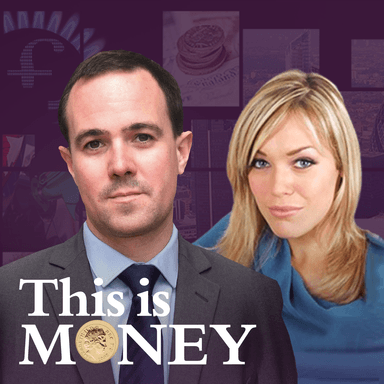
Nvidia is the talk of the town after posting better than expected earnings results — has the chip maker genuinely eased fears of an AI bubble bursting, or just bought the market a bit more time? Georgie Frost, Simon Lambert and Lee Boyce discuss what it means for investors in Britain and how much weight this multi-trillion dollar company holds. The Financial Services Compensation Scheme deposit protection limit will rise 41% to £120,000 from 1 December and data suggests young people are too focused on saving for short-term goals and risk falling behind — does it matter? What is really likely to be in the Budget? With a week to go, we have a quick last-minute briefing on what Chancellor Rachel Reeves could be cooking up. There might finally be a crackdown on ticket touts for gigs and other events — Simon reveals just how passionate he is about it and why action is needed. And finally, find out what former England and Arsenal goalkeeping legend 'safe hands' David Seaman did with his £100,000 Aston Martin DB7.
Published:
Original Broadcast: Modern Mindset
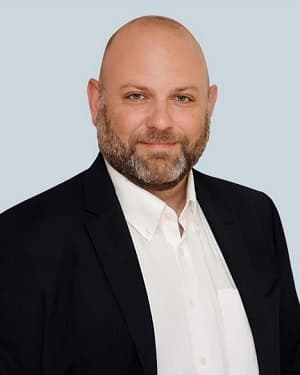
“With the cost of the Jaguar LandRover hack approaching nearly £2 billion, this now stands as the single most economically damaging cyber incident the UK has ever seen — and it should serve as a wake-up call for every board and public body in the country. This isn’t just a technical failure but an economic and operational resilience failure". With over twenty years of experience in information technology and cybersecurity, Simon Onyons brings deep expertise in financial regulation, cyber strategy and operations to help organisations strengthen their security posture and resilience. Simon also serves as Senior Advisor to the UK National Cyber Security Centre (NCSC), where he works on the NCSC Advisory Group to support national initiatives aimed at improving cyber resilience across the UK, and he continues in this role while at Kroll.
Guests: Simon Onyons
Published:
