
Original Broadcast: This is Money
The dust has settled on the Budget but while we now know what Rachel Reeves plans for our finances, many questions remain. The Budget featured a raft of tax rises — but also left out some moves that were widely rumoured to happen. On this special bonus episode, Simon Lambert is joined by Lisa Caplan, of Charles Stanley Direct, to find out what people are asking after the Budget — and the answers to those important questions.
Guests: Simon Lambert,Lisa Caplan
Published:

Original Broadcast: Thought for the Week

Labour MPs' celebration of the Chancellor's abolition of the 2-child welfare benefit cap in last week's Budget statement completely eclipsed the outstanding need for a comprehensive strategy to address the economic and familial stresses impacting children, adolescents and young adults: so much worse than a few decades ago. We focus on three specifics in this commentary: the continuing denial of Government to deliver Child Trust Fund money to low-income young adults unaware of their money; the punishing burden of the student loan system, and the instability and insecurity caused by a society which has lost its moral compass. Background music: 'Generations Away' by Unicorn Heads
Published:
Original Broadcast: This is Money
After the endless speculation, the Budget finally arrived this week. Rachel Reeves seemed happy with her statement and Sir Keir Starmer has been out singing its praises, but was the Budget a diamond in the rough or a dud? On this Budget 2025 episode, Georgie Frost, Lee Boyce and Simon Lambert dive into a Budget that many have commented is the most chaotic they can remember. After all the rumours, worries and waiting, how good or bad was it? Some of the expected financial pain didn't arrive but there were plenty of tweaks to tax our pocket and our patience. Did the Chancellor cut the right balance between getting more money in and supporting the economy, did she articulate a clear plan, or are we back to drifting about aimlessly in the tax and spending doom loop doldrums? And most importantly, what will all the measures mean for your money?
Published:
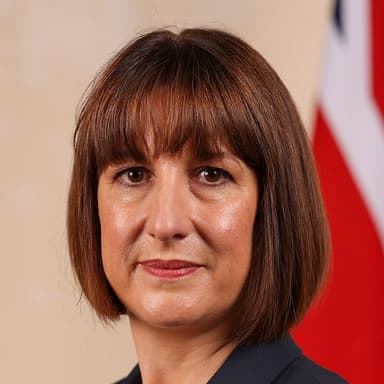
The UK Budget speech and the response from Leader of the Opposition Kemi Badenoch — and including the 'Point of Order' beforehand from Mel Stride regarding the premature release of the OBR report. This is the unabridged record without comment, and the recording runs for one hour and31 minutes.
Guests: Mel Stride,Rachel Reeves,Kemi Badenoch
Published:
Original Broadcast: This is Money
Nvidia is the talk of the town after posting better than expected earnings results — has the chip maker genuinely eased fears of an AI bubble bursting, or just bought the market a bit more time? Georgie Frost, Simon Lambert and Lee Boyce discuss what it means for investors in Britain and how much weight this multi-trillion dollar company holds. The Financial Services Compensation Scheme deposit protection limit will rise 41% to £120,000 from 1 December and data suggests young people are too focused on saving for short-term goals and risk falling behind — does it matter? What is really likely to be in the Budget? With a week to go, we have a quick last-minute briefing on what Chancellor Rachel Reeves could be cooking up. There might finally be a crackdown on ticket touts for gigs and other events — Simon reveals just how passionate he is about it and why action is needed. And finally, find out what former England and Arsenal goalkeeping legend 'safe hands' David Seaman did with his £100,000 Aston Martin DB7.
Published:
Original Broadcast: This is Money
This week we've had some worrying-looking unemployment figures and disappointing GDP growth. Meanwhile, the FTSE 100 soared within touching distance of 10,000, before hitting a Friday slump. Mix it all together and what does it show about the UK economy? Lee Boyce, Helen Crane and Georgie Frost discuss. Nationwide Building Society has promised to keep all of its branches open until 2030 while major banks exit the high street. Does it make business sense? The Royal Mint has launched some yellow gold coins that has investors excited, and what about gold's 'annoying little brother', silver - is it set to see prices soar? Lastly, we reveal the tale of a reader who had their flights to Dubai cancelled by BA at the last minute... before being quoted £20,000 one-way by Emirates to get away for half-term.
Guests: Helen Crane
Published:
Original Broadcast: Thought for the Week
Universal publicly-funded welfare, including health care and education, has proved a very expensive Marxist experiment in western democracies. Far from resolving the challenge of eliminating poverty and disadvantage, it has loaded a huge debt burden on public finances which Rachel Reeves needs to address in the forthcoming UK Budget. But there is no point in loading still more income and capital taxes on the wealthy: they'll just leave the country in ever greater numbers, and economic growth — and tax revenue — will fall as a result. A much more practical solution is that people who can afford to pay for these services should do so, so that Government can focus financial support where it's most needed. Background music: 'The New Order' by Aaron Kenny
Published:
Original Broadcast: This is Money
Can you do a financial podcast and not mention the Budget right now? No, not really. But you can give it a good shot at keeping Budget chat to the minimum. Georgie Frost, Lee Boyce and Simon Lambert take breather from talking about Rachel Reeves and the endless cycle of madness that is the Budget 2025 build up to discuss some other stuff. Can they get through it without mentioning the Budget any more than five times? Listen to find out. First up it's interest rates. Why did the Bank of England hold, will there be a cut next month and how far will they fall? Plus, how have rate expectations shifted and where exactly do mortgage borrowers and savers stand now? Next, it's house prices. Leading estate agent Savills says property values are due to rise 22% in five years, but is that a lot or a little — and could homes actually be getting cheaper. Lee explains why savers are stashing so much cash and Simon sounds a clarion call for moving your money out of insult accounts. Then, via a quick diversion avoiding sneaky speed cameras, it is on to the turf war. Is it ever okay to consider artificial grass and what will it do to your house price? Listen to the end for B***** mentions score.
Published:


This episode revisits the motivations, expectations and emotions in the past — reaching right back into childhood years — which may have led to an overweight problem today, and how to let go of that baggage. It discusses a personal challenge, of course, but it could be approached as an analogy for the way that the post-war call for Attleean universal welfare has driven seven decades of excess public spending so that our country is now groaning from the weight of excess debt. It might therefore help politicians to let go of their emotional baggage and focus on a new slimline style of government which targets help and support where it's needed.
Published:
Original Broadcast: This is Money
The dream of becoming an ISA millionaire will be a common ambition among many This is Money listeners. Most will probably dismiss it as fantasy but what if you could actually get there? Recently a long-time This is Money reader got in touch to tell us that he had managed just that... at the age of 36. Ollie Perry was happy to share his story, not to boast but to try to inspire others and to show that it isn't just wealthy boomers who can manage to make an ISA million. Georgie Frost, Lee Boyce and Simon Lambert discuss his story and what we can learn from it. How did he do it, are the big risks he took suitable for others, and what if you if prefer to get rich slower but with less chance of something going wrong? With a new top rate in town, Lee takes a look at the best buy savings deals on the market, Simon delves into why so many homes are seeing asking prices cut, and Georgie ponders why people are rushing to pay big money for retro tech that doesn't work.
Published:
