
Original Broadcast: The Financial Outlook for Personal Investors

Lord John Lee has become a champion for people investing in the stock market over recent years: he's written three books on investing, he's a patron of ShareSoc, the society for individual shareholders in the United Kingdom, and he's now challenging Government, broadcasters and regulators to encourage a much higher profile for investing in shares on TV and radio. Gavin Oldham meets with John to discuss the background to his initiative and his proposals for change; and they go on to consider how customer share ownership can be expanded, how to encourage more active participation in shareholder voting, and how to improve financial education
Guests: Lord Lee
Published:

Original Broadcast: The Financial Outlook for Personal Investors

Why invest? Glen Goodman, with the assistance of Annie Weston, explains why investing makes sense and talks you through the merits of the stock market, in this tenth episode of Share Radio's 'Managing My Money' course. What's the difference between saving and investment? It's all in the risk. They discuss shares, bonds and funds, and which perform best over the long term.
Guests: Glen Goodman,Annie Weston
Published:
Original Broadcast: The Bigger Picture
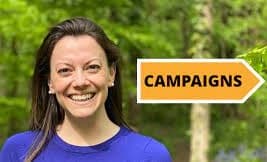
The news that Sarah Green has wrested the constituency of Chesham and Amersham off the Conservatives for the first time in its history merits a look back over the Liberal Democrat's long decline. The centre ground is not an easy place to be in politics, and the new MP has needed the frequent sight of HS2 bulldozers and stormtroopers to get her majority - but she's done it. This look-back over Liberal Democrat history with Simon Rose and Mike Indian was first published in October 2019, just before the last General Election.
Guests: Mike Indian
Published:

Original Broadcast: Economist Questions

Research into workplace productivity and management practice is often focused on the links between ‘Good’ and ‘Efficient’ practices. ‘Good’ covers employee-friendly policies; for instance, those providing opportunities for better Work Life Balance. In contrast, ‘Efficient’ practice includes the use of KPIs, setting clear performance expectations and tackling underperformance where it is identified. In this episode Peter Urwin and Professor Richard Saundry discuss this, drawing on their own understanding as researchers and experiences as line managers. The operational reality is that managers hold a position between the interests of their organisation and those who work for them – how do they balance the (often competing) need to create both efficient and good workplaces?
Guests: Prof. Richard Saundry
Published:

Original Broadcast: This is Money
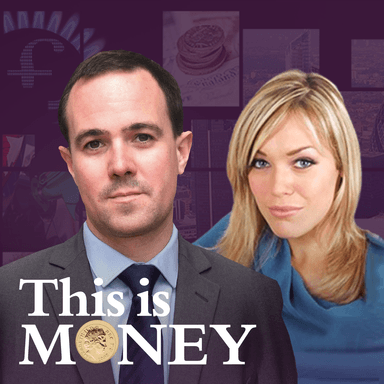
On Monday, we take a step towards normality – you can get your hair cut, have a beer outside at the pub and visit a clothes shop. But what about the future of the office? Will we ever go back full-time, or is a hybrid model more likely – and if you're tempted by a shed office, what should you look out for? On this week's podcast, Lee Boyce and Georgie Frost discuss the future of work and the pros and cons of WFH life, including the 'shoffice.' Elsewhere, should you claim home working tax relief and how much could you get for doing so? And what can you do if you want to change career, whether that is a huge leap or a 'bridging' one. Plus, are workers heading for a horrible shock when it comes to retirement and what can be done to navigate it?
Guests: Simon Lambert
Published:


In this episode, hosts Matt Dickson and Franz Buscha are joined by Sonia Bhalotra, Professor of Economics at the University of Warwick. Sonia has a prodigious volume of research on topics relating to the creation of human capital, early child development, gender inequality, intergenerational mobility, and the impact of early life health on later life outcomes. Sonia discusses her research on the impact of the advent of antibiotics in the US in the 1930s on child pneumonia, and how this had long-lasting impacts on children’s education and labour market outcomes. She explains how improvements in child health and mortality have implications not just for the children themselves, but also for women’s fertility decisions and labour supply. The discussion then turns to the trade-off between the “quality” and the quantity of children that a family have – including the surprising news that having twins is not as random as we might have assumed. Finally, they touch on Sonia’s research into the long-term benefits of treating maternal depression, which highlights how a non-drug therapy can have profound and long-lasting impact on maternal health and wellbeing.
Guests: Sonia Bhalotra
Published:
Original Broadcast: This is Money
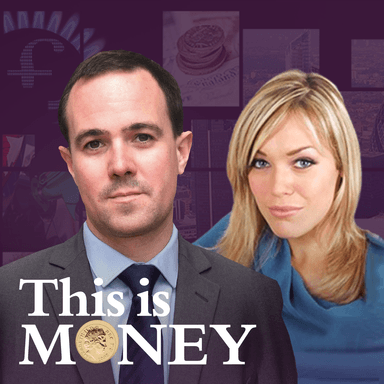
Financial scams are on the rise. The coronavirus lockdowns have seen a fresh burst of investment cons with fraudsters impersonating legitimate companies to steal tens of thousands of pounds. Unwitting savers are being lured into fake savings and investments, such as fixed term bonds or share schemes, and transferring large sums to fall victim to clone fraud. What’s behind this burst of crime and how can people protect themselves? On this week’s podcast, Georgie Frost and Simon Lambert discuss the rising tide of fraud, how to stay safe and what more can be done to combat it. Also, on the show, the pair look into the cases of the mortgage prisoners, trapped paying high rates ever since the financial crisis while others have seen their monthly payments slashed. The Deliveroo float is also on the agenda – why did the shares slump as it hit the stock market? And finally, campervans are in hot demand, making this a good time for VW to be launching its new mini Caddy California: with sleeping space for two and an optional tent that turns into a home on wheels for all the family. Would you want one?
Guests: Simon Lambert
Published:

Original Broadcast: The Talk by the WealthiHer Network

This month, the WealthiHer Network is proud to partner with the UN Girl Up Foundation, to talk about how women and girls have been most impacted by Covid-19 and what can be done to redress the balance. Joining Tamara Gillan is Hallie Hudson, Director of Development, Girl Up and Bethel Kyeza, Co-president Girl Up London to discuss how girls around the world are overcoming inequality and how Girl Up are helping them to become the leaders of tomorrow.
Guests: Hallie Hudson
Published:
Original Broadcast: This is Money
The headlines are telling you the property market is running hot, that the stamp duty holiday extension is stoking the fires, and buyers are ignoring the economic slump to pile in. There’s just one problem: your home is on the market and you aren’t even getting any offers. Perhaps you are in a property coldspot. As property watchers will tell you, the house price index-driven view of a national housing market is something of an illusion. In reality, there are lots of different local property markets and they don’t all blow hot and cold at the same time. At the moment, while some areas are running hot, others are cold – and it’s not as simple as city vs village, or urban vs rural. Even within London, there are some areas with high demand and others just a few miles away where it is tough to sell. On this week’s podcast, Georgie Frost, Adrian Lowery and Simon Lambert look at how to take the temperature of your local property market and how that can help you buy or sell. They discuss what next for house prices – and whether they can possible keep rising at such a robust pace from here, or if we could see more stability and an end to Britain’s casino property market. Also on this week’s show: how to invest in companies that will help improve the environment, the FCA’s warning on thrill-seeking young investors and the best Isa investments of all time. And finally, the electric car grant has been cut and will be axed for all cars costing more than £35,000. Is this foolish as we try to wean the nation off petrol and diesel, or a wise move to stop subsidising those already wealthy enough to buy an expensive brand new motor?
Guests: Simon Lambert
Published:


Adam Cox is joined by Simon Marsh from 108 Harley Street to discuss the effect the pandemic has had on the NHS and their ability to carry out breast screening. They look at the way private clinics relieve some of the pressure the NHS faces, and how the NHS and private clinics may continue to work together in a post-COVID Britain.
Guests: Simon Marsh
Published:
