Original Broadcast: Thought for the Week
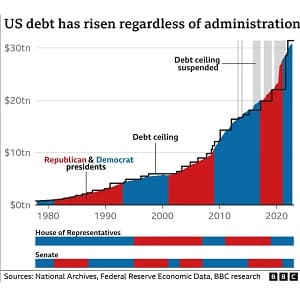
Democracy is a great blessing, but it has a major Achilles Heel — it is not good at coping with all the long-term issues which are growing in number and importance. Trying to address long- and short-term issues together without specific definition will always handicap the former. That's why Princess Anne focused correctly on this challenge in her interview with the Canadian Broadcasting Corporation — but monarchy can do little more than draw attention to the problem, which needs constitutional and political resolution. We propose a way forward out of this dilemma, suggesting how the United Kingdom can set a course for the democracies of the world to follow. Background music: 'Saving the World' by Aaron Kenny Image source: BBC Research, based on National Archives Federal Reserve Economic Data
Published:
Original Broadcast: Thought for the Week

The first SHARE conference in Cambridge last Friday provided much food for thought, and comments particularly drew attention to the need for widespread understanding of stock ownership if 'Stock for Data' is to take hold. In financial terms and because equity stock in companies is a surrogate for human enterprise, earnings from capital growth and dividends massively outperform bonds and cash over the long term; meanwhile stock owners have a key role in contributing to the governance of their companies, as employee shareownership has shown. All this needs straightforward and intelligible communication. Background music: 'Communicator' by Reed Mathis
Published:
Original Broadcast: Thought for the Week

For the past 250 years, starting with Adam Smith, there have been valiant attempts to set out principles for taxation: but they have been principally domestic, and with no attempt to address inter-generational rebalancing. Without specific provisions requiring hypothecation of inheritance levies it's hard to see how disadvantaged young people can be empowered with resources and life skills so that all may share in future wealth creation. Don't expect change in this week's Budget, but the Treasury Select Committee should look again at the principles they established over ten years ago. Background music: 'Dark Alley Deals' by Aaron Kenny
Published:

Let's hope that, as we approach 2023, we can start looking ahead in contrast to the wave of pessimism with which we greeted 2022, and which has proved to be so accurate in retrospect. Is it too much to hope that we are at the nadir of the economic cycle, and at the point when tyrants recognise the limits of force and suppression of individual freedom? Is it unrealistic to imagine a world in which we share our resources more willingly, and empower young people from all backgrounds to achieve their potential? The next two weeks will give us a chance to reset the dial — we must do better in 2023. Background music: 'O Holy Night' by DJ Williams
Published:
Original Broadcast: Thought for the Week

The UK Office for National Statistics reports that one person in every six was born overseas. It's evident that geographical mobility is already with us: the problem is now social mobility. Solutions lie not with parochial nationalism, but in working with business and organisations with an international governance remit such as the UN for a long-term resolve, just as we are attempting to do with climate change. Background music: 'Wandering Soul' by Asher Fulero image source: Hippopx https://www.hippopx.com/
Published:
Original Broadcast: Thought for the Week

Hardly a day goes by without yet more evidence of our approach to empowering the next generation being wholly dysfunctional; the gap between Baby Boomer and Millenial wealth is reaching record proprtions. Meanwhile, as President Biden made his bold move last week to cancel student debt, it provoked an explosive eruption of criticism from Wall Street Journal readers. Here in the UK, another initiative to help the young, the Child Trust Fund, has over £1 billion waiting to be claimed by young adults, almost all from low-income backgrounds, due to a lack of focus from Government. It's hard to avoid the conclusion that we are a selfish and short-sighted generation of ‘Baby Boomers’ — we need to stand back and take stock of our failure to empower coming generations. Background music: 'Future Glider' by Brian Bolger Please visit Webpage for charts and links: https://www.shareradio.co.uk/thinkingaloud/newsletters/comment-wc-2022-08-30/
Published:
Original Broadcast: Thought for the Week

Are rich people who come from poverty more likely to be sympathetic to others in poverty because they understand their lives? Jack Ma, founder of Alibaba, clearly isn't: here he is speaking in 2014 'You are poor because you have no ambition'. And a new study confirms that those who make the journey from rags to riches are more likely to pull the ladder up behind them. It goes to show that, if we want a fair and just society where young people have not only the life skills but also some resources to achieve their potential as an adult, we must build the strategy into the structure of our economic governance: much as public health and addressing climate change are accepted by an all-party consensus. Background Music: Waterfall by Aakash Ghandi
Published:
Original Broadcast: The Bigger Picture
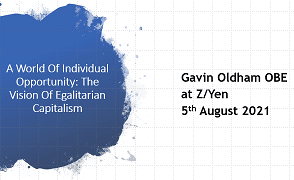
Imagine a world in which everyone has a stake in the great tech firms that serve them each day, and where dividends are gradually replacing wages to provide regular income for everyone, as work becomes scarcer as a result of automation? Imagine a world where every young person not only has a small inheritance with which to start their adult life, but also the opportunity to build its value by learning life skills? Simon Rose is taking a well-earned break this week, so we’re taking the opportunity to bring you a talk given Gavin Oldham in August to the leading City of London think-tank Z/Yen.
Published:
Original Broadcast: Mini Mindset
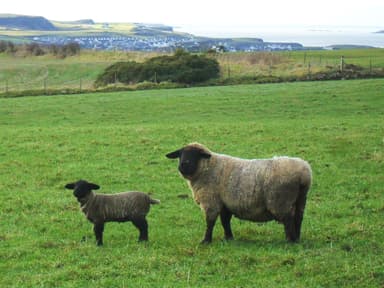
Adam Cox is joined by butcher and founder of Lamb2Ewe, Thomas Kitchen-Dunn, to look at how there have been increased demands for locally sourced meats amongst consumers and how buying directly from farmers helps to support local economies. They delve into the difference between buying directly from the source and buying from supermarkets, and buying from supermarkets can make it more difficult to know exactly where meat comes from. They discuss the positive environmental impacts of shopping for locally sourced meat and how to support local farmers.
Guests: Thomas Kitchen-Dunn
Published:

Original Broadcast: The Talk by the WealthiHer Network

As 60% of UK money will be in the hands of women by 2030, it is important to understand the issues that the next generation of women care about – and how this impacts every aspect of their lives. This next gen can encompass girls and women from 13 to 39 (and beyond), and their views can differ widely from their mothers’ and grandmothers’. The younger generations are much more aware of environmental, equality, gender, and diversity issues. This may well impact on how they spend, invest, and consume. They are much more likely to research companies online, placing stock on good customer service and value for money rather than brand loyalty. The brands they interact with also have to have good credentials in terms of how they treat their staff and workers along the supply chain; information for which is sourced through social media, online, or through their offline networks. In this programme Tamara Gillan is joined by A-Level student Emily Astley, and her mother Patricia Astley, Executive Director at Julius Baer. They are both passionate about how the next generation of women will rise, and they share their views on the differences between generations regarding money, changing definitions of success, and purpose.
Guests: Emily Astley,Patricia Astley
Published:
