
Original Broadcast: This is Money
While the world worries about coronavirus, there is another decade-defining event going on – the US election. Will Donald Trump win a second term as US President and have the world dance to his tune for four more years, or will Joe Biden take charge – and what on earth would that mean for people? There is less than a month to go until the US election and under normal circumstances you would expect all the focus of stock market commentators to be on that. It’s not normal circumstances though. The second wave of coronavirus and renewed lockdowns have the world’s attention and the election, if not a sideshow, is definitely not as centre stage as we would usually expect. So, does that mean it doesn’t matter for investors, or should be thinking about it and positioning themselves for the outcome? Does it even matter if Trump or Biden wins, as long as the Fed keeps printing and stimulus keeps coming, and would any decisive win be better than a disputed result? On this week’s podcast, Simon Lambert, Georgie Frost and Sarah Davidson, discuss the US election and what it could mean for our money over here in the UK. And if two septuagenarians arguing about who is going to be the boss of the free world isn’t your thing, what about investing in the future beyond that? Keeping on the investment tip, the team dive into the world of green money and how to invest to back improving the world, or even get a green mortgage or current account.
Guests: Simon Lambert,Lee Boyce
Published:

Original Broadcast: Policy Matters

In this episode of Policy Matters, hosts Franz Buscha and Matt Dickson discuss a non-COVID-19 policy topic that has been prominent in recent months following the recent Black Lives Matter protests: the ethnic inequalities that exist in socio-economic outcomes in the UK. Examining the issue from an academic viewpoint, Franz initially explains how labour economists define discrimination and how theoretically classical economics would expect labour market discrimination on the basis of race or gender to be eliminated by market forces. Matt and Franz go on to discuss how reality clashes with this theory, setting out the extent of contemporary ethnic and gender pay inequalities and some of the issues with analysis that seeks to explain away the large differences in pay between men and women and between white workers and those of other ethnicities. The discussion continues by looking at studies directly highlighting discrimination in hiring in both the UK and the US, before concluding with thoughts on what policymakers could do to address these longstanding inequalities.
Guests: Franz Buscha
Published:

Original Broadcast: Policy Matters
In this episode of Policy Matters, hosts Franz Buscha and Matt Dickson talk to Simon Burgess, Professor of Economics at the University of Bristol. With COVID-19 and all the policy responses to it still very much at the forefront of public policy, Franz and Matt begin by asking Simon about the likely impact of school closures on child attainment, how this may affect existing socio-economic inequalities and what policymakers could do to tackle the issue once schools settle back to “normal”. The additional problems of replacing GCSE and A-level exams with teacher assessments are also considered, along with the difficult situation facing graduates finishing university this year. The discussion then moves on to Simon’s research into the impact of students’ effort on their educational outcomes. Simon explains how international football tournaments and school visits from Michelle Obama have provided insights into the huge effect that students’ effort can have on their results – and how policymakers might harness these findings.
Guests: Matt Dickson,Simon Burgess
Published:

Original Broadcast: Share Radio Interview with Vicky Sayers

Over two months into lockdown here in the UK, you may well be wondering when life is going to get “back to normal” once this is all over – but many are already convinced that things will never be the same. Vicky Sayers is joined by Ian Jenkins, CEO of Intrinsic Insight and author of a report projecting how behaviours could change following the COVID-19 outbreak, to talk about what the “new normal” might look like.
Guests: Ian Jenkins
Published:
Original Broadcast: Policy Matters

In this episode of Policy Matters, Matt Dickson and Franz Buscha join the show from their respective homes as the country continues to adjust to life and work during lockdown. With the global COVID-19 pandemic currently dominating almost all policy areas, Franz and Matt discuss how different countries have tackled the outbreak and what lessons can be drawn from the more successful approaches. They move on to explore the economic impacts that have been seen already, the rationale behind the Government’s unprecedented series of economic policy interventions, and what we can learn from previous recessions about how we might get out of the one we’re now in. They also ponder the likely effects of the crisis on the labour market – in particular, the graduate labour market.
Guests: Matt Dickson
Published:

Original Broadcast: Economist Questions
The last four decades have been a roller-coaster ride for economic liberalism. Riding high from the early 1990s, falling trade barriers boosted international trade, integrated countries such as China into the global economy and significantly reduced the number of people in absolute poverty. Developments in technology ‘supercharged’ these impacts, radically altering our lives as workers and consumers. In this interview, Peter Urwin speaks to economist Vicky Pryce about where it all went wrong – is the rise of populism simply a reaction to the 2007-08 financial crisis, or is it a wider backlash against liberalism? Not everybody welcomes the changes brought about by globalisation, and change always implies disruption – is there a case for government compensation, targeted at those who bear the brunt of disruption and are less able to take advantage of the gains from liberalisation?
Guests: Vicky Pryce
Published:
Original Broadcast: New Economics Foundation

It’s one of the most important inventions of the 20th century. But unlike the phone, the car, computers and indoor plumbing, the weekend is still stuck in the 1930s. As productivity increased, the promise of shorter working hours always seemed just out of reach. But now, there’s a campaign to make the 4-day week a reality within our lifetimes. Obviously many people would love to work less. But what would it mean for the economy? And what would it take to make it a reality? Ayeisha Thomas-Smith is joined by Alfie Stirling, Head of Economics and Aidan Harper, Researcher at the New Economics Foundation.
Guests: Ayeisha Thomas-Smith,Alfie Stirling,Aidan Harper
Published:
Original Broadcast: Economist Questions
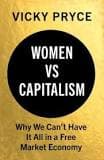
Peter Urwin is joined by economist Vicky Pryce to talk about her latest book, discussing gender equality. Vicky argues we cannot rely on the free market to bring about gender equality. In theory we might expect discrimination to be short-lived in competitive markets, as it is an inefficient use of resources; this is clearly not happening, however, and Vicky makes a strong case for more forceful intervention to rectify the market failures that perpetuate gender inequality. An inherent short-termism in the capitalist system, a continuing level of support for motherhood that is insufficient, and various conscious/unconscious forms of bias all contribute to this failure of markets. The proposed solutions are radical, but without significant public intervention we will continue to waste vast amounts of female potential.
Guests: Vicky Pryce
Published:
Original Broadcast: Policy Matters

In this episode of Policy Matters, hosts Matt Dickson and Franz Buscha talk to Sam Friedman, Associate Professor of Sociology at the London School of Economics and a member of the Social Mobility Commission. Sam explains his recent research highlighting how those from working class backgrounds find themselves earning less than colleagues from more privileged families, even when they have the same qualifications and work in the same elite professions. Going beyond the numbers to understand this ‘class pay gap’, Sam describes the numerous interviews he undertook with elite professionals from different backgrounds and what this revealed about the hidden mechanisms that operate, often rewarding privilege rather than merit or ability. The discussion then moves on to the dominance of private schools – and especially a particular group of private schools – in the elite strata of society and considers the sorts of policies that might help to make Britain a more meritocratic society.
Guests: Sam Friedman
Published:
It's fair to say environmental issues have moved to the forefront of the agenda in recent times. This week, editor Simon Lambert, assistant editor Lee Boyce and host Georgie Frost take a look at potential changes you can make to help the pound in your pocket turn a little greener. Simon explains his rallying cry for us to be his acronym 'Layby' rather than being labelled 'Nimbys'. Layby – or look after your back yard – is a movement to look after the country we live in. When it comes to investing, there is a growing movement where savers who want to combat climate change invest a small amount of money in the very companies eco-activists traditionally rally against, such as fossil fuel giants Shell and BP – so why? What can you do to be a more eco-friendly tourist? And finally… it's hard enough trying to predict how rapidly a normal car will depreciate, but estimating the loss of value of an electric vehicle is a whole other ball game. We reveal all.
Guests: Lee Boyce,Simon Lambert
Published:
