Original Broadcast: The Financial Outlook for Personal Investors

For Simon Rose's last discussion with Russ Mould of A J Bell, Russ looks at the tentative bid for FTSE 100 stock Segro, once a warehouse REIT, now moving into data centres. It's the 16th bid for a UK property company in the last four years and yet UK investors don't seem interested in UK commercial property. The 10-year gilt yields 4.7% against a sector yield of 6.3%. Does that premium compensate investors for the risks? Russ wonders why, if REITs believe the sector discount to assets of 25%, they don't buy back their own shares. It would be more positive for the sector than bids, even if those bids show that there are people overseas who think that there is value there.
Guests: Russ Mould
Published:
Original Broadcast: The Bigger Picture
It is hard to say what finished off Keir Starmer as PM, says Mike Indian. It was political death by a thousand cuts. But he seemed to be decent and honourable and tried to do his best. Posterity will probably be kinder to him than many current critics are. It now seems certain that Andy Burnham will become Prime Minister and Mike thinks it right that there won't be a distracting leadership contest. Burnham says he will stick to Reeves's fiscal rules which means he will have to show a lot of creative thinking. He is more charming and wittier than Starmer, but will that be enough? His appointment of Chancellor will be crucial. We don't really know what a Burnham premiership will look like. Mike reflects that in the nine years he and Simon Rose have been discussing The Bigger Picture, the world has become a less certain place, politics is now a lot less kind and public trust in institutions and politicians has declined considerably.
Guests: Mike Indian
Published:
Original Broadcast: Gadgets and Gizmos

Steve Caplin reports that the Chinese LineShine supercomputer is beating the American El Capitan. A battery-swapping system for electric lorries has an serious flaw. Those streaming the World Cup may see goals 100 seconds behind those following on live TV or radio. An AI law firm has won its first case, for a fraction of the cost of a real solicitor. A Japanese estate agent uploaded a promotional video featuring a woman in a green bodysuit, as he couldn't work out how to edit her out. Some gamers waiting for Grand Theft Audio 6 have been scammed because of their eagerness to experience the game. The Osmo Pocket drone for pro filmmakers is full of features, but only £445. And there's a crowd-funded harness to make walking on country roads safer.
Guests: Steve Caplin
Published:
Original Broadcast: The Business Of Film

James Cameron-Wilson says that, despite the heatwave, box office was up 72%, thanks to #1 Toy Story 5. Maintaining the franchise's fantastic quality, it is vastly amusing but also perhaps the most moving of the films. With a plot about the damage screens are doing to children, it has a joyful score, new characters and a stellar voice cast. At #12 is Virginia Woolf's Night & Day, with Haley Bennett an astronomer suffering the social mores of the day. It's a very loose adaptation, with plot, class and language all making it seem more modern. Although kinetic, it feels redundant, despite a great central performance. James wondered why it was made at all. He did, however, enjoy Netflix's Office Romance with Jennifer Lopez and Brett Goldstein. Goldstein, famous from Ted Lasso, co-produced and co-wrote this romcom, which is silly and predictable but also an entertaining romp.
Guests: James Cameron-Wilson
Published:
Original Broadcast: Gadgets and Gizmos
Steve Caplin is keen on the social media ban for under-16s: not so Simon Rose. Steve is impressed by new lighter batteries for electric planes. AI is helping to cope with mutating viruses. The Argus robot is a dodecahedron with 20 legs and 20 eyes, looking the most unlike a human of any robot. There's a cautionary tale about a banking scam. There's a stylish – but probably expensive – way of hiding your TV when not in use. A screwdriver with a built-in camera can help with fiddly jobs. A company claims to be about to launch a space station with artificial gravity. And the Chinese government has asked the West to stop sending spy turtles into its waters.
Guests: Steve Caplin
Published:
Original Broadcast: The Financial Outlook for Personal Investors

Yana Mihaylova of Edison Group focusses on XP Factory, a £32m AIM stock which is the market leader in escape rooms with Escape Hunt and also operates Boom Battle Bar. They are making a strategic shift from the latter to the former. Escape rooms are significantly cheaper to set up and run than the bars and are more profitable, so the shift makes sense, particularly given rising employment costs. The company aims to expand from 24 to 100 venues and make them larger and is helped by smaller escape room operations closing. Neil Shah of Edison returns to PZ Cussons, which manages a brand portfolio including Carex and Imperial Leather. Its trading update showed the new management team's turnround is ahead of expectations. The company aims to spend twice as much on R&D in 2027 as in 2025 and, with a yield of 4% and a forward P/E of 12, Edison feels it has a long way to run.
Guests: Yana Mihaylova,Neil Shah
Published:
Original Broadcast: The Business Of Film
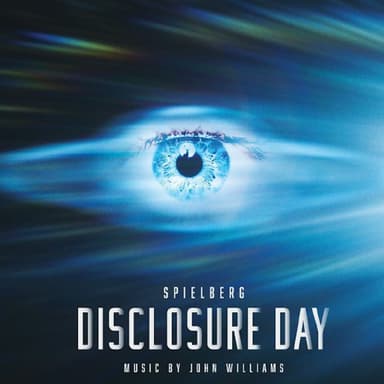
James Cameron-Wilson was intrigued but not overly excited by #1 Disclosure Day, Steven Spielberg's first sci-fi film since Ready Player One. Emily Blunt plays a TV meteorologist dreaming of better things who shows signs of ESP and can suddenly speak foreign languages. A spiritual companion to Close Encounters, it gets ever weirder, taking in AI, religion, quantum physics and more, but is essentially a chase movie. At #12 is Tuner, which is the best and most entertaining that generic cinema can get. Leo Woodall stars as a piano tuner with incredible sensitivity to sound who finds he has another talent. Dustin Hoffman steals every scene he's in. You can see where it's all going, but it's a most engaging film. On Amazon Prime is the horror film Over Your Dead Body about a dysfunctional couple harbouring murderous intentions. It is an 18, deservedly so, but is also very funny.
Guests: James Cameron-Wilson
Published:
Original Broadcast: The Bigger Picture

Professor Tim Evans of Middlesex University is concerned about the illiberal realities of a blanket ban on social media for children. It lets parents off the hook, infringes civil liberties and free speech and could be a slippery slope towards universal ID. Such heavy-handed restrictions have dangerous unintended consequences; just think about Prohibition and the War on Drugs. Tim is worried that it may end up pushing young people into harm's way. He also is puzzled that dramatic changes in Cuba are not being widely reported. US sanctions have forced the authorities to accept that they must move towards a degree of capitalism. But they intend doing it by pivoting towards China, an idea rejected by the US. Whatever happens, reinstating a degree of private property rights is a massive political story.
Guests: Professor Tim Evans
Published:
Original Broadcast: Gadgets and Gizmos
Steve Caplin is not willing to stump up £650 for Lego's tallest model, Gaudi's Sagrada Familia. Nor is he likely to buy a souped-up version of a 1960s Ford Escort for £300,000. There's a surgical robot that works inside you which is the size of a seed. Philips has come up with dual-sided monitors to check that your hotel bill is correct. The results of a psychological survey of the problems of life on the moon won't surprise anyone. Schiphol Airport plans to use TaxiBots to take planes to their takeoff spot. The D4RYL humanoid magician has been barred from joining the Magic Circle. And phone chargers from Amazon and eBay can explode, according to Which?
Guests: Steve Caplin
Published:
Original Broadcast: The Financial Outlook for Personal Investors
Russ Mould of A J Bell discusses the quarterly reshuffle of the FTSE100 constituents. Coming in at the end of June are Computacenter, Investec and Aberdeen. Investec is the second bank to enter this year while Computacenter is felt to be an AI play. Out go Berkeley Group, Rightmove and Mondi, indicating sentiment turning against real estate and property. Investors often find companies moving up to be a positive indicator but we should not forget the disaster that was ASOS entering the FTSE250. In the end, investors should stick to fundamentals and valuations. Sector flows can be a useful soft indicator for spotting bubbles. Russ gives examples from the tech bubble and that of oil and resources. You just never know what is going to tip a sector over the edge or when.
Guests: russ mould
Published:
