Original Broadcast: This is Money
A new campaign has been launched to turn Britain's savers into investors. In this bonus episode, Simon Lambert speaks to Karen Northey of the Investment Association about the Take The Next Step campaign, backed by members of the investment industry and supported by the Government and Chancellor Rachel Reeves.They discuss why investing matters, how it can grow people's wealth and why Britain's savers can seem reluctant to dip their toes into something that has the power to substantially improve their chance of beating inflation and improving their finances.
Guests: Karen Northey
Published:
Original Broadcast: Motley Fool Show
Motley fool co-founder and CEO Tom Gardner and the team break down the changing dynamics behind earnings from four of the Magnificent 7 companies, what to make of consumer sentiment at a 60-year low, and answering a guest question about the new competition for NVIDIA chips. Tom, Tyler, and Jon discuss the markets reaction to Alphabet, Microsoft, Amazon, and Meta’s earnings report, what matters most about AI infrastructure spending, rising costs for the hyperscalers — fear or opportunity? Also, how to make sense of the lowest consumer sentiment readings of all time, what works when everyone is miserable, and NVIDIA’s customers are building their own chips — is this a problem? Companies discussed: Alphabet (GOOG, GOOGL), Amazon (AMZN), Meta Platforms (META), Microsoft (MSFT), Micron Technologies (MU), NVIDIA (NVDA), Walmart (WMT), Target (TGT) Kroger (KR), Dell Technologies (DELL). Host — Tyler Crowe; Guests — Tom Gardner, Jon Quast.
Guests: Tom Gardner,Jon Quast
Published:
Original Broadcast: Motley Fool Show
OpenAI reportedly missed its own growth and revenue expectations recently, and shares of Oracle and other companies with large deals with the AI giant are trading lower. The team consider the OpenAI news and much more. Tyler Crowe, Matt Frankel, and Lou Whiteman discuss OpenAI's disappointing growth and what it means for tech investors, whether OpenAI and its rivals will be able to scale to profitability anytime soon, General Motors' latest earnings and why Matt is such a big believer, and whether investors should take the time to vote their shares. Companies discussed: ORCL, CRWV, GM, F, GOOGL, GOOG. Host — Tyler Crowe; Guests — Matt Frankel, Lou Whiteman.
Guests: Matt Frankel,Lou Whiteman
Published:
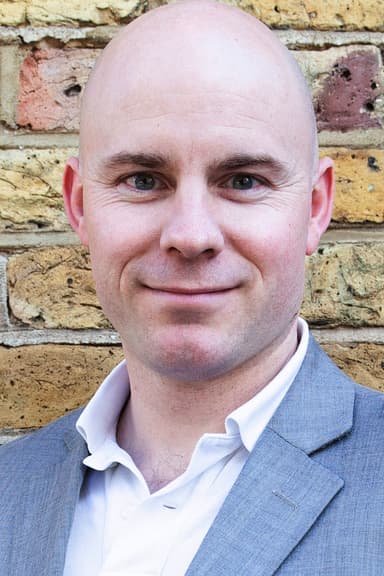

Whether you're selling to reluctant buyers or in any other challenging situations which can cause stress or frustration, it helps to be a bit playful and enthusiastic to move ahead. This episode helps you build that resilience for finding the way through to positive outcomes.
Published:
Original Broadcast: The Financial Outlook for Personal Investors

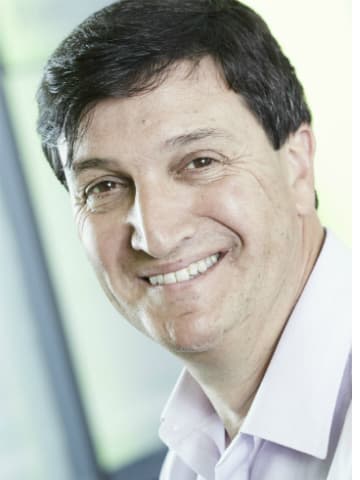
Russ Mould of A J Bell says that oil briefly touched $125 a barrel because the "blockade of the blockage" is cutting off 1/5 of the global supply. However, he points out that this is a paper future oil price. The current price is higher, as one might expect with tight supply. There are, of course, other types of oil which are currently much cheaper because they go nowhere near Iran. The equity market is pricing in a speedy solution but it is just as easy to argue that the blockade will continue and that stagflation will be the result. It isn't only oil that is the problem, of course. Urea and helium are both essential commodities also facing supply problems. Even if the markets are correct and things de-escalate, in the face of so much that has been destroyed or damaged, it is unlikely to be a smooth ride ahead.
Guests: Russ Mould
Published:
Original Broadcast: Gadgets and Gizmos

Steve Caplin majors on robots. A robot won a half marathon against human runners, another beat elite players at table tennis while one in Poland chased away wild boars in a town. Heartwarmingly, a controlled robot in Ukraine rescued a 77-year-old woman escaping Russian shelling. A 23-year-old Polish influencer hoping to raise £100,000 for a cancer charity ended up with over £50 million. NASA will let you spell out your name using features on Earth. Mark Zuckerberg is going to beam solar power from space, but to power AI rather than homes. And Steve admires the world's narrowest car and a shopping bag that can increase in size and grow wheels.
Published:
Original Broadcast: The Bigger Picture
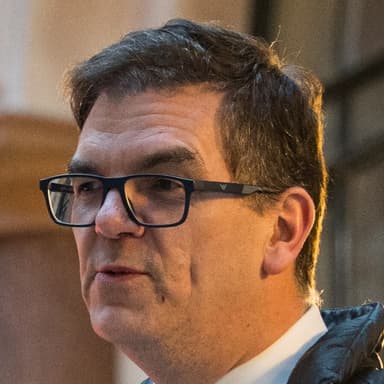
Political commentator Mike Indian analyses the recent political kerfuffle involving Olly Robbins, Morgan McSweeney & Keir Starmer. It has exposed qualities lacking in the PM, particularly his lack of curiosity, his failure to grasp the nettle and to give direction. But he appears to have 9 lives, particularly given the fact that there is no obvious successor. It may be that the economic response to events matters more than who is in Number Ten. Given the ropy relationship between the US government and Starmer, the King's visit to the United States and his address to the US Congress has shown the value of the Royal Family when it comes to soft diplomatic power. It was a considerable PR victory, reminding the Americans why we are an important diplomatic ally. But the UK needs a fundamental re-evaluation of our geo-political alliances and should work to be more independent.
Guests: Mike Indian
Published:
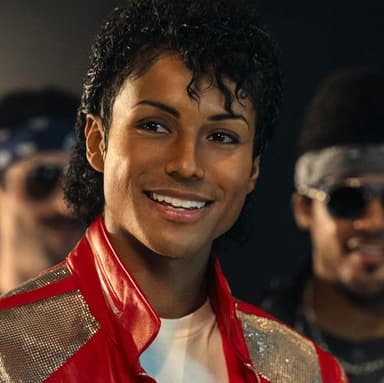
James Cameron-Wilson says that Michael's £11.5m opening was 68% of the weekend take. It's the biggest opening for a musical biopic but, under Antoine Fuqua's direction, it's a hagiography telling only half of the Michael Jackson story. With his nephew in the starring role and six producers having the surname Jackson, perhaps that's not surprising. Overly affectionate, it doesn't feel real but that won't deter his fans. On Netflix, the survival thriller Apex stars Charlize Theron and Taron Egerton. It gripped James from the off. The less you know about the plot, the better. It delivers in spades as a thriller but it does go to some very dark places. Watch it if you dare. As for Roommates, also on Netflix, this is a crude college comedy which is offensive mechanical dross. The longer it went on, the more depressed James became.
Guests: James Cameron-Wilson
Published:
Original Broadcast: Thought for the Week
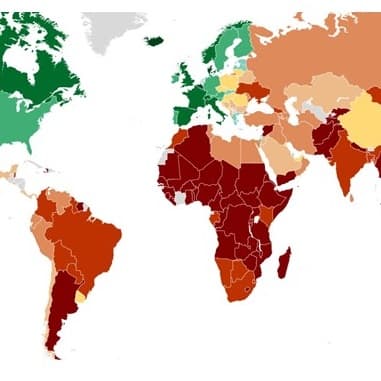
'Contemporary global inequalities are close to their early 20th century level, at the peak of Western imperialism': the World Inequality Report in 2022 laid bare the failure of the past one hundred years of socialism. It has failed to make any appreciable impact on wealth polarisation — in fact Russia has the highest wealth inequality in the world alongside Brazil, with a 'Gini Coefficient of 0.82. It's time to show how egalitarian capitalism can shift the dial. Background music: 'Missing Persons' by Jeremy Blake Image source: Wikipedia/Credit Suisse
Published:
Original Broadcast: This is Money
Is the younger generation going to end up worse off than their parents? A new survey shows young people aged 18 to 29 say the events of 2026 have left them feeling particularly pessimistic about the future, and the number who believe they will be worse off than their parents has doubled in the past year. Georgie Frost, Simon Lambert and Lee Boyce discuss whether the idea the next generation will have it better than previous ones is now bunkum. Elsewhere, what do you want to see less of on the high street? And how can they improve? A student loan interest cap kicks in later in the year — for some. Simon explains what it means. And do you use a dodgy fire stick for watching TV, films or football? We discuss whether the net is closing in on their illegal use.
Published:
