Original Broadcast: Motley Fool Show
The conflict in Iran is on every investor’s mind as stocks seem to sink day after day. But panic is never the right answer, and we discuss what we’re doing (or not doing) in today’s market. Then we deep dive into an unloved company, Disney. Travis Hoium, Emily Flippen, and Lou Whiteman discuss Iran, the market, and what we’re doing now, Broadcom earnings, Disney deep dive, and stocks on our radar. Companies discussed: Stantech (STN), Honeywell (HON), Disney (DIS), Broadcom (AVGO), NVIDIA (NVDA). Host — Travis Hoium; Guests — Emily Flippen, Lou Whiteman.
Guests: Emily Flippen,Lou Whiteman
Published:
Original Broadcast: Motley Fool Show
The market is dropping and oil is up today as the Middle East continues to be on investors’ minds. But is this a panic the market will get over or the kind of action that will push the economy into recession? Travis Hoium, Lou Whiteman, and Matt Frankel discuss rising oil prices and today’s market, Target’s ho hum business — and do insider buys really matter? Companies discussed: Target (TGT), SoFi (SOFI), Shift4 (FOUR), ServiceNow (NOW). Host — Travis Hoium; Guests — Lou Whiteman, Matt Frankel.
Guests: Matt Frankel,Lou Whiteman
Published:

Original Broadcast: The Hypnotist

Coping with high stress/toxic environments can result in carrying heavy emotional baggage rooted in early years' experience, particularly if accompanied by a desire to be accepted or to fit in with a facade/mask to obscure that stress. Adam Cox uses metaphorical images of a deep dark forest, and being weighed down with heavy baggage, in order to re-visit coping strategies from childhood to introduce a more authentic, 'future-pacing' and real version for the listener.
Published:

Original Broadcast: The Financial Outlook for Personal Investors

Russ Mould says that investors can't ignore what is happening in the Gulf, which has seen a jump in volatility and sharp declines in some of the investments that been doing best but which had little downside protection. Despite this, the broader US market is roughly where it was a week before. Oil is up by a fifth, but that is still much less than during other Middle Eastern crises. For investors, though, the important thing is not to panic. If you had good reasons for your investments before, then be patient, seek diversification and value and avoid leveraged situations. Energy stocks like BP and Shell account for 10% of the FTSE by market cap and the market is saying the oil price is about right. Oil service companies could be worth a thought if the conflict lasts longer than expected but the only one the UK has left now is Hunting.
Guests: Russ Mould
Published:
Original Broadcast: The Bigger Picture
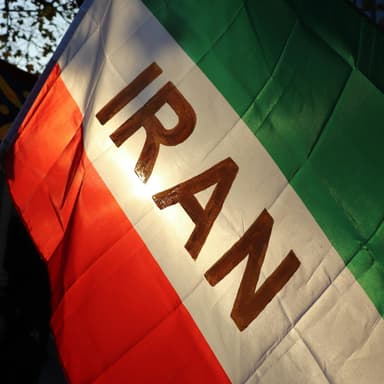
Political commentator Mike Indian says that Kier Starmer's decision to stay out of the strikes on Iran is wise. There is no sense of an end-game plan. All this is a long way from Trump's first-term rhetoric of "no foreign wars". It is hard to see this as anything but naked aggression. We, however, have built our post-war security under the US nuclear umbrella and our failure to protect our bases merely highlights the cutbacks in our armed forces in the last 15 years or so. If we are smart, perhaps we will use the conflict as a spur to increase our defence budget. Has Starmer's refusal to help harmed the "Special Relationship"? That hasn't really existed since Bush and Blair. Iran will run out of ammunition before the Americans but what happens then? The muted reaction to the Spring Statement shows how quiet things have become on the Rachel Reeves' front. The forecasts for growth have been downgraded but the Chancellor is still on track to meet her tax and spending rules. A surge in inflation as a result of "events" could yet pose her problems.
Guests: Mike Indian
Published:
Original Broadcast: Gadgets and Gizmos

Steve Caplin says Apple have come out with a slew of new devices, the only interesting one being a new MacBook at a surprisingly low price. When three AIs simulated war games, they opted for nuclear war 95% of the time. Wearers of Meta's Ray-Ban AI glasses might be disturbed to learn that they are being watched by monitors in Nairobi, including while they have sex. The Tesla Cybercab has no steering wheel or pedals; it also can't actually drive on roads yet. Google spinoff Beam offers high speed internet using light instead of cables. Surrey University has found a way to make batteries without expensive lithium while a Cornish firm thinks lithium will be a by-product of its geothermal power. There's a robot chef that can produce up to 500 dishes, but might take a while to clean afterwards. And a Finnish company is embedding retractable studs in tyres to make snow chains redundant.
Guests: Steve Caplin
Published:
Original Broadcast: The Business Of Film
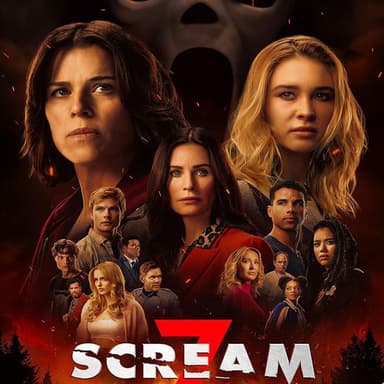
James Cameron-Wilson is not a fan of #1 Scream 7, despite the return of Neve Campbell. He didn't care for the characters, found the film nasty and thought it made no sense. He was more positive about The Testament of Ann Lee, with Amanda Seyfried giving a career-best performance as the founder of the Shaker movement with an excellent Mancunian accent. It's a bonkers film, being a musical biopic on an enormous visual canvas but it shows what cinema can do and is very memorable. Come See Me In The Good Light is an extraordinary documentary – nominated for an Oscar – about a poet with terminal cancer and how they deal with it. It is deeply moving but also full of joy and laughter. It is also one of the most intimate and personal films about a relationship.
Guests: James Cameron-Wilson
Published:

Original Broadcast: Thought for the Week

The past half-century has provided a generally well-structured approach to employment and career opportunities, but there's little reliability or predictability today. Increasingly, young people cannot rely on others to sort their lives out for them: they need to take matters into their own hands. Could it be the time for entrepreneurial activity to move from the margins to the centre-ground? Background music: 'Any Thing You Can Dream' by The Whole Other
Published:
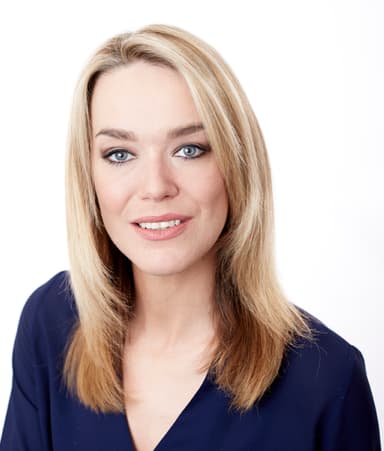
Original Broadcast: This is Money
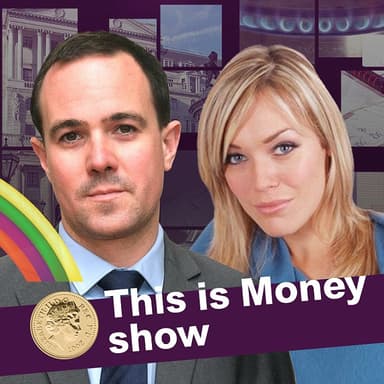
The flying Footsie is on course for the best start to the year since 1998 and driving it are 20 stocks that have risen by 50% or more in the past year. Simon Lambert, Lee Boyce and Georgie Frost discuss what's going on for the flagship UK index and whether the run can continue. They also zoom in on Rolls Royce — its shares have soared by more than 1000% in five years. Is it too late to join the party? When it comes to Junior ISAs, many parents worry that once their children get access, they'll fritter it away — but is that really the case? New analysis suggests not. And NS&I has cut the underlying rate on its Premium Bonds to 3.3%. Is it time to move your money? The Government is rolling out the next phase of making tax digital which will require some to file quarterly — is expensive chaos on the way? Lastly, can you save money with an EV versus a petrol equivalent? Or does the maths simply not add up?
Published:
Original Broadcast: Motley Fool Show
Paramount has won the bidding war for Warner Bros. Discovery, but it was Netflix stock that soared on the news. We cover the latest in buyout news and give some ideas for more companies that should be on the block. Travis Hoium, Lou Whiteman, and Jon Quast discuss Paramount wins WBD, NVIDIA’s “disappointing” quarter, earnings roundup, Joby and Uber, and stocks on our radar. Companies discussed: Rocket Lab (RKLB), Mercadolibre (MELI), Netflix (NFLX), Warner Bros Discovery (WBD), NVIDIA (NVDA), Alphabet (GOOG, GOOGL), The Trade Desk (TTD), Snowflake (SNOW), Joby (JOBY), Uber (UBER), Doordash (DASH), Lyft (LYFT), Spotify (SPOT), Live Nation (LYV), Disney (DIS), New York Time (NYT), Garmin (GRMN), Peloton (PTON), Berkshire Hathaway (BRK-B, BRK-A), PayPal (PYPL). Host — Travis Hoium; Guests — Lou Whiteman, Jon Quast.
Guests: Lou Whiteman,Jon Quast
Published:
