
Original Broadcast: This is Money

From next year, those in receipt of the full state pension will have to start giving some of it back to the government in income tax.The Treasury has put in place a ‘waiver’ system for less well-off pensioners — but it has been revealed last week that those who chose to defer their state pension could miss out because of the extra income they receive. Georgie Frost is joined by Helen Crane and Tanya Jefferies to discuss whether that is fair, and how Britain’s state pension got so complicated. Staying on the subject of retirement, estimates of how much we have to save for old age usually assume we will own our homes and have paid off the mortgage by the time we quit work. But for a growing number of people, that isn’t the case — and a new study suggests those who rent during retirement could have to save £419,000 extra to afford it. With today’s youngsters expecting to get on the ladder later — or perhaps not at all — the problem is only set to worsen. The team discuss this shift and what people can do to prepare. Despite a greater need for rented homes, the property market is awash with landlords trying to offload flats. Who is going to buy them, and is it an opportunity for first-time buyers? And finally, from Lidl trainers to pizza menus and even Argos catalogues, we reveal the everyday items that could be tomorrow's collectables. Items covered: 01:04 — Why some pensioners could face income tax on the State Pension; 05:00 — Who could miss out on the Government’s proposed tax waiver?09:47 — Should you still defer your State Pension? 14:35 — The looming problem of renting in retirement; 19:00 — How much more do renters need to save for retirement? 23:36 — Why are so many landlords selling their flats? 27:28 — Are flats still worth buying? 30:58 — Is buy-to-let becoming a professional investors’ game? 36:08 — Could the junk in your house actually be worth money? 39:56 — Why old Argos catalogues and pizza menus could become collectables; 41:08 – Crane’s compliment of the week: Sainsbury’s.
Guests: Helen Crane,Tanya Jefferies
Published:
Original Broadcast: Motley Fool Show
With a company as large and as meticulously covered as NVIDIA, you would think there wouldn’t be anything that surprises us anymore. So much for that thesis. NVIDIA's most recent earnings and guidance blew past everyone’s expectations and setup another stellar year for anything AI-related. Jon, Matt, and Tyler dissect NVIDIA’s most recent earnings as well as the “hidden” winners and losers from the most recent earnings results. Plus, Crowdstrike’s earnings and a mailbag question about local vs. cloud AI. Tyler Crowe, Matt Frankel, and Jon Quast discuss NVIDIA’s earnings and guidance update, the winners and losers from NVIDIA’s earnings, Crowdstrike’s earnings, is Crowdstrike’s stock a buy? Plus, Is local AI a hyperscaler problem? Companies discussed: NVDA, HP, DELL, CRDO, ONTO, IESC, GRMN, RBRK, ZS, SPCX. Host — Tyler Crowe; Guests — Jon Quast, Matt Frankel.
Guests: Jon Quast,Matt Frankel
Published:
Original Broadcast: Motley Fool Show
Meta Platforms has been the subject of several lawsuits. By some estimates, the potential fines for these lawsuits were as high as the market cap of the entire company. Today, the company settled several of these high-profile lawsuits for $18 billion, and for several changes to its social media apps. Lou, Rachel, and Tyler dig into the details of the settlement and how it will impact Meta. Plus, Intuit’s earnings and the listener mailbag. Tyler Crowe, Rachel Warren, and Lou Whiteman discuss Meta’s $18 billion settlement, was this a “best case scenario” for Meta? Intuit’s earnings: SasSpocalyse or corporate complacency? Plus, will Uber’s European fines impact its future? Companies discussed: META, GOOGL, INTU, UBER. Host — Tyler Crowe; Guests — Matt Frankel, Rachel Warren.
Guests: Matt Frankel,Rachel Warren
Published:

Original Broadcast: Modern Mindset

New research suggests Brits are choosing to live in the moment in 2026, rather than save for the future. The data from Fred. Olsen Cruise Lines shows guest numbers are up, and more and more people are exploring the idea of solo travel. Joining Rory McGowan to discuss this is the Guest Experience Director at Fred. Olsen, Doug Glenwright.
Guests: Doug Glenwright
Published:

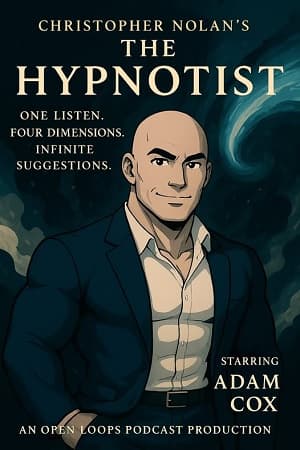
Adam Cox joins Greg Bornstein on an episode of Greg's 'Open Loops' podcast series, with Adam discussing how his methodology for hypnotherapy has developed through learning psychology, styles of therapy and different uses of metaphors. It's a bit different from our normal episodes, as Adam Cox is the guest here. Please search for 'Open Loops with Greg Bornstein: Conversations That Bend' to find out more.
Guests: Greg Bornstein
Published:

Original Broadcast: Gadgets and Gizmos

Steve Caplin discovers that balcony solar panels, while a good idea, don't actually appear to be on sale anywhere. He explains how Meta will change its safety limitations for children worldwide after settling a lawsuit against it for $17bn. Digger drivers will soon be able to train on video simulators. There are air-conditioned jackets for dogs. A 3D-printed banjo may not tempt the likes of world-class players like Bela Fleck. The Tokyo-Osaka bullet train is to offer an overnight stop, while a sightseeing bus in Tokyo now has sushi on offer on a conveyor belt. Take care if a car park suggests you pay by QR code. And an AI doctors' receptionist in Yorkshire unfortunately can't understand a Yorkshire accent.
Guests: Steve Caplin
Published:
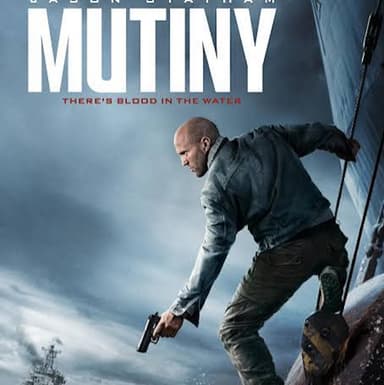
Spider-man and The Odyssey are still leading the box office, says James Cameron-Wilson. At #8 is Jason Statham's latest thriller, Mutiny. He plays a bodyguard on the run after his client is murdered. It's formulaic and very violent but the stuntwork is effective and inventive while the director piles on the suspense, turning a B-movie into a B-plus. #10 is an unsympathetic biopic of chef Antony Bourdain which has a great cast. However, with such a disagreeable protagonist, it is not one of James's favourite foodie films. On Amazon Prime is Mother Mary with Anne Hathaway a former pop star in an oppressive movie full of florid dialogue. Think Bergman's Persona crossed with The Dresser, says James. He ends with the top 10 movies of all time in terms of audience numbers, with the #1 of all time remaining the same as it has for decades.
Guests: James Cameron-Wilson
Published:

Original Broadcast: Thought for the Week
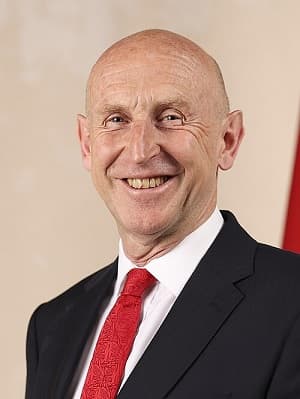
With the summer holidays drawing to a close in the next few days, the new team at HM Treasury will be busy looking at fresh ideas for the Budget on 28th October. The challenging economic situation calls for a fresh look at some of the underlying strategies which have driven debt so high over the past half-century. The really big problem is the extent to which 'universal, free-at-the-point-use' health care has caused deep generational unfairness; that, combined with the triple lock and unfunded state pensions, place real burdens on young generations. It's time for a major change in the underlying logic. Background music: 'People Watching' by Sir Cubworth
Published:
Original Broadcast: This is Money

NS&I has just boosted the Premium Bonds underlying rate again to its highest level in nearly two years. The odds of winning are better too, with more £50,000 and £100,000 prizes to boot. More than 22 million of us hold Premium Bonds but after years of being beaten by the best savings accounts, are they suddenly looking like a good option again? And why raise the rate at all? Lee Boyce, Georgie Frost and Helen Crane discuss. Imagine you bought a house years ago, pay your mortgage every month ... only to discover the Land Registry still hasn’t registered it in your name. It could mean you can’t remortgage and are subsequently out of pocket. We discuss a case where this happened, why, and a deluge of cases we are hearing about. Inflation is heading the wrong way again - up from 2.6% to 2.9% in July, largely thanks to higher energy costs. What does that mean for base rate? Energy bills are likely to head higher still, with forecasts of another rise price cap rise in October. Is it time to fix? And finally, plug-in solar panels can be legally sold from next week. But before we all rush out to buy them, we explain what you need to know.
Guests: Helen Crane
Published:
Original Broadcast: Motley Fool Show
Most of the time, stock investors don’t pay attention to the bond markets. But when the words “not seen since 2007” start getting thrown around, investors start to look at lot harder at what’s going on with bonds. Lou, Matt, and Tyler dissect the recent moves in bond markets and how it’s showing up in stocks. Plus, Klarna’s and Home Depot’s earnings and how they are feeling the strains of the debt market. Tyler Crowe, Lou Whiteman, and Matt Frankel discuss the sell-off in bonds and how it’s affecting stocks, why AI companies are getting caught up in the bond market moves, Klarna’s earnings, and Home Depot’s earnings. Companies discussed: META, GOOG, MSFT, KLAR, HD. Host — Tyler Crowe; Guests — Matt Frankel, Lou Whiteman.
Guests: Matt Frankel,Lou Whiteman
Published:
