

We may be leaving the EU – but what should our mode of departure look like? Today we’re joined by the IEA’s Head of Health and Welfare Dr Kristian Niemietz, and Associate Director Kate Andrews – to discuss the pros and cons of the so-called ‘Norway Option’ – a form of Brexit under which the UK would leave the European Customs Union, but remain in the Single Market. The ‘Norway model’ refers to two key European organisations: The European Free Trade Association (EFTA) and European Economic Area (EEA). Norway (along with Liechtenstein and Iceland) is a member of both. And the idea has been gaining traction recently, with the government’s Chequers model looking unpalatable to EU negotiators, and the British public alike. Yet although Kristian is a proponent of the Norway option – it’s not quite as simple as that. He would probably back a Hard Brexit – provided we had a realistic chance of becoming a deregulating, free trading outside of the Single Market. Unfortunately, here the Zeitgeist is very much against free market types, he argues.
Guests: Dr Kristian Niemietz
Published:

Original Broadcast: Motley Fool Show

What should investors be watching for the rest of 2018? What are investors missing in today’s market? Analysts Jason Moser and Matt Argersinger tackle those questions and share a few stocks on their radar. Plus, best-selling author Malcolm Gladwell...
Guests: Jason Moser,Matt Argersinger,Malcolm Gladwell
Published:

This week we’re joined by Dr Steve Davies, Head of Education at the IEA, to discuss one of the most hot-button issues in American politics – the right to bear arms. Interviewed by the IEA’s News Editor Kate Andrews, Steve gives us a history lesson on the Second Amendment, where the right came from, and what both sides of the debate get wrong. Steve argues that the right to bear arms came from a philosophy of classical republicanism or civic humanism, which means that in a self governing republic, all citizens have certain obligations and duties upon them, one of which is to use force against outsiders or a tyrannical state. In this sense, gun ownership is an individual right, but not a private right, making gun advocates and gun control advocates alike wrong in their approach to the issue. Steve discusses the Swiss-style system, which is one of the best examples of an armed militia, and how its gun laws differ from the United States. The pair also discuss what makes homicide rate and mass shootings more or less likely, with Steve arguing it has less to do with weapon proliferation, and more to do with societal norms and culture. Finally, Kate asks Steve the million pound question – does the UK need a Second Amendment?
Guests: Dr Steve Davies
Published:

Original Broadcast: Economist Questions

Recent decades have seen radical change in the way that conflict is dealt with in UK workplaces. Collective industrial action has been replaced by pursuit of individual employment rights through litigation, via Employment Tribunals (ETs). Richard Saundry is Professor of HRM & Employment Relations at Plymouth University Business School. He has written extensively on workplace conflict and brings a wealth of experience, including time spent at NUM HQ at the start of the 1990s. Peter and him consider why employees in certain types of firm report higher levels of conflict; whether ‘vexatious’ ET claims represent a significant cost to firms and discuss how conflict is resolved in the modern workplace. In this modern setting, what role is there for the union movement and what are the implications of Brexit?
Guests: Richard Saundry
Published:
It seems the likelihood of leaving the EU with no deal is increasing — in fact it’s now 60 per cent, according to Trade Minister Liam Fox. Also on the up in recent weeks has been the proliferation of apocalyptic scenarios about what this might mean. Planes won’t fly, we’re told, there will be shortages of medicines and food - some claim that basic products like cheese, butter and even sandwiches could become “luxuries” after Brexit. At the same time, leaving without an agreement would require a tremendous amount of planning and preparation - and there are many legitimate concerns and warnings worth listening to. Today we’re joined by the IEA’s Chief Economist Julian Jessop and Senior Counsel Victoria Hewson, to discuss how the UK is preparations for such eventualities and how seriously we should take the dire warnings about what this would entail.
Guests: Julian Jessop,Victoria Hewson
Published:

Original Broadcast: New Economics Foundation
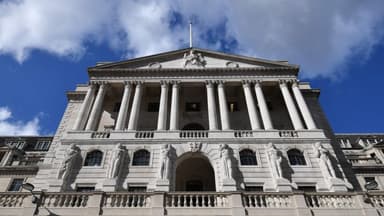
The Bank of England has moved interest rates to their highest level in almost a decade. If you’ve got a mortgage, it might get more expensive. If you’ve got savings, you might get a bit more interest on your money. Does this tell us anything about what the Bank of England thinks is going to happen to the economy? And was it the right decision? Ayeisha Thomas-Smith speaks to Alfie Stirling, head of economics at the New Economics Foundation.
Guests: Ayeisha Thomas-Smith,Alfie Stirling
Published:

With power struggles within Parliament dominating the headlines, it’s all too easy to forget the bigger picture of our departure from the EU. Yet, with public consultations opening up about our first bilateral trade agreements, this debate is continuing – though perhaps not getting the attention it deserves. Today we’re joined by Shanker Singham, Director of the IEA’s International Trade and Competition Unit, and Senior Policy Analyst Dr Radomir Tylecote. They examine these consultations, what it could mean for business – and what the government should be doing to give firms more certainty and help them prepare for the future. Finally, they examine public opinion towards free trade. If recent polling is anything to go by, the public mood is decidedly anti-protectionist – just as it was in the 19th century, when free exchange triumphed over mercantilism in the battle of ideas.
Guests: Shanker Singham,Dr Radomir Tylecote
Published:

Original Broadcast: This is Money
Interest rates have finally risen above 0.5 per cent for the first time in almost a decade. The Bank of England has decided that the UK's economy is healthy enough to finally get above the financial crisis emergency level, but was the hike a wise move or a mistake. Of those in favour, some have been calling for a rate rise for a long time, others believe we must try to get back to normal before recession hits. But those opposed believe even this tiny shift up to a very low base rate level of 0.75 per cent, is a gamble too far from the Monetary Policy Committee's ratesetters. On this week's podcast, Simon Lambert, Lee Boyce and Georgie Frost dive into the rate rise. Why did the bank hike rates, who will it affect, why do interest rates even move up and down and how did they end up at 0.5 per cent in the first place? Also on this week's show, Lee introduces us to the world of micro-saving, we discuss the case of the financial adviser who suddenly ask for £10,000 more and Simon tries to show he is down with the kids who are making money by selling on Depop.
Guests: Simon Lambert,Lee Boyce
Published:
This is Money is going on holiday… Don’t worry, loyal podcast fans they aren’t really going anywhere, but they are dedicating this week’s show for those lucky among you who are! And even if that’s not you, there’s some pretty useful stuff coming up for when you do. From your pre-travel arrangements, travel insurance and holiday money, to when you land abroad, paying the right way and what you eat! And touching down back home…whenever that may be. So seats and traytables back to the upright position, seatbelts on and notepads at the ready…
Guests: Simon Lambert,Rachel Rickard-Straus
Published:
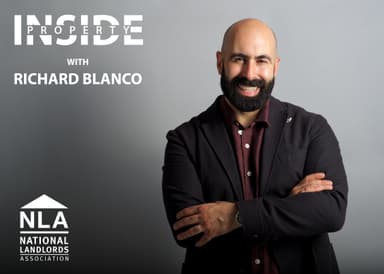

How would you feel about compulsory three year tenancies? Would they provide essential security of tenure for families or pose too big a risk for landlords? The government has appointed the third housing minister this year. What will Kit Malthouse bring to the table and how confident are you that housing really is a priority for ministers? Will the Bank of England end nearly a decade of ultra low interest rates and increase them this August? And we discuss a new initiative to help student landlords support tenants with mental health issues. Richard Blanco is joined by Chris Norris, Director of Policy & Practice at The National Landlords Association and and Carol Lewis, Deputy Editor of Property and Personal Finance at The Times.
Guests: Chris Norris,Carol Lewis
Published:
