
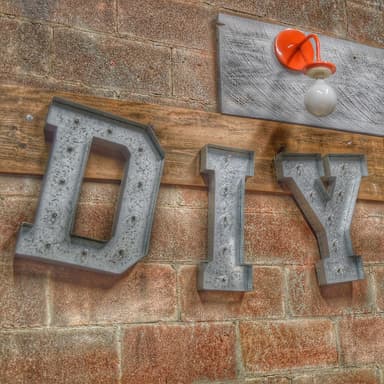
Adam Cox talks to business strategist Clive Daley, who is committed to helping retailers evolve and adapt to the dramatic changes that have occurred on our high streets and retail parks. Clive highlights that, while many retailers have been hit hard by the growth of online alternatives, there is still a place in the market for “experiential retail”. He talks about the rise of online market places – including the fast-growing online service Mano Mano, which intends to create a new way for people to buy and sell home and garden products; an industry that currently remains a place where most people still expect to physically see bricks-and-mortar retailers. They discuss why the DIY and home improvement industry is ripe for a seismic shift: could this potential “DIY disruption” be a good thing? Find out more at www.cfdstrategicsolutions.com.
Guests: Clive Daley
Published:

Original Broadcast: Economist Questions

Since the late 1990s, there has been a push to improve the educational outcomes of disadvantaged children - with governments viewing free early education as key to the achievement of this aim. Dr Jo Blanden, Reader in Economics and Research Director of the School of Economics at the University of Surrey, joins Peter Urwin to talk of her work investigating whether free nursery care impacts children’s educational performance. Overall the suggestion is that these policies have been associated with a large amount of "dead weight" - using taxpayers' money to support people in doing things that they would have done anyway. They consider whether the findings present a challenge to the suggestion that early years interventions provide best returns; or is it the specifics of this policy that need rethinking?
Guests: Jo Blanden
Published:

In this week’s programme: Hotel booking sites have been told to sort themselves out following an investigation by the competition watchdog over whether they work in the best interest of consumers. Plus – whisper it softly – but there may be some good news for savers, including from a bank called “Marcus”… but don’t be fooled by the friendly-sounding name. Moving into the realms of retirement – how much do you really need to save, and will having a specific figure in mind help you achieve it? And finally, we take a look at the winners and losers of the World Cup so far… both on and off the pitch!
Guests: Rachel Rickard-Straus
Published:


Today we’re joined by the IEA’s Director General Mark Littlewood and Research Director Jamie Whyte on the 70th birthday of the National Health Service. Interviewed by News Editor Kate Andrews, they discuss how – despite all the praise around the NHS the past few weeks – the system is an international laggard on many key measures including health outcomes, survival rates and waiting times. Whilst cash injections may help in the short term, they will prove to be a waste of taxpayers’ money if structural changes are not made alongside investment. Far from celebrating the NHS this week, policymakers should be considering wholesale reform of the centralised system to improve patient care and save lives.
Guests: Mark Littlewood,Jamie Whyte
Published:

Today we’re joined by the Advisory Board of our International Trade and Competition Unit, made up of world-renowned experts in trade policy – including Sir Lockwood Smith, John Weekes and Alan Oxley, who join us today, along with ITCU’s Director Shanker Singham. Interviewed by the IEA’s Madeline Grant, they give us a global view of Britain’s place in the world – and their prognosis of how our negotiations have progressed so far. They examine best practice in a range of different areas, including negotiating tactics, and discuss what an optimal free trade arrangement with the EU would look like. They also lay out some of the potential dangers and obstacles Britain may face in reaching this outcome. Finally, they consider how an independent Britain could advance the cause of free trade on the world stage.
Guests: Sir Lockwood Smith,John Weekes,Alan Oxley,Shanker Singham,Madeline Grant
Published:
Original Broadcast: This is Money
The National Health Service is 70 years old this year and most of us are proud of the British institution, leaning on it in our times of need. However, we’re living longer with more complex problems and the service keeps crying out that it needs more money. Where does it come from? Do we make cost-cuttings or plough lots of money in, do we increase income tax, make the rich pay, or introduce a new special ring-fenced tax? Theresa May announced plans for £20.5billion-a-year cash boost – but was a little short on the detail. She hinted at tax rises and mentioned a ‘Brexit dividend’. This is Money editor Simon Lambert, along with consumer affairs editor Lee Boyce and presenter Georgie Frost look at ways to fix the NHS in the latest podcast.
Guests: Simon Lambert,Lee Boyce
Published:

Original Broadcast: Policy Matters

In this episode of Policy Matters, hosts Franz Buscha and Matt Dickson are joined by Professor Paul Gregg from the University of Bath to consider the prospects for today’s young people leaving education and entering the labour market. We hear a lot in the news about the job market challenges facing young people; and yet employment rates are at record levels, recent generations are the most educated ever with more and more people going to University and then enjoying a graduate wage premium – so what’s the problem? Paul provides an insight into how the economy has been changing over the last decade or so, the ways in which the recession following the 2007/8 financial crisis was unlike anything we’ve had before, and how young people have suffered the most. Matt and Franz then discuss with Paul the ways in which the challenges for policy are different now to what’s often been the case in the past, and consider what government policy can do to improve the prospects for young people today.
Guests: Matt Dickson,Professor Paul Gregg
Published:

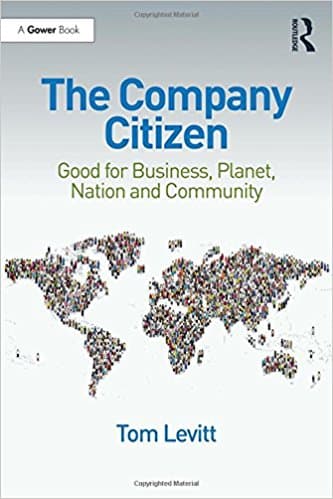
Linda Lewis and former Labour MP Tom Levitt are back for their third discussion in a series inspired by Tom’s latest book, ‘The Company Citizen: Good for Business, Planet, Nation and Community’. In this episode, they discuss how business can be a force for good both in combating hunger and in the better management of resources through the “circular economy”. Tom shares how he came to write the book, why engaging with smaller businesses is crucial to the cause and how Paul Polman, CEO of Unilever, has emerged as a leader of the responsible and sustainable business movement.
Guests: Tom Levitt
Published:
Original Broadcast: This is Money
Another month and another set of mixed messages about the state of the housing market is revealed. First-time buyers who have a deposit and home movers in the North are doing fine. But London is on the ropes and second and third movers are staying put, bringing the market to a standstill. In this week’s This is Money podcast, editor Simon Lambert, assistant editor Rachel Rickard Straus and money broadcaster Georgie Frost get into the aural attic to unbox the facts. The villain of the piece, they agree, is stamp duty. It used to be a 1% tax on purchases but it got tweaked into a giant cash cow for the Treasury by successive Chancellors. Stamp duty is stalling the market and needs to change but how? Also on the show: Paddington Bear 50p Gate.
Guests: Simon Lambert,Rachel Rickard-Straus
Published:
Original Broadcast: Economist Questions
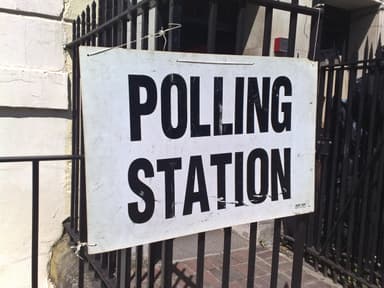
In this interview, Peter Urwin considers the ‘collective failures’ suffered by the polling industry in recent years; from their inability to predict the 2015 British general election outcome, to Brexit, to Trump. Joining him is Professor Patrick Sturgis, who discusses findings from his chairing of the British Polling Council/Market Research Society Inquiry into the 2015 General Election Polls; and in his role as Specialist Advisor to the House of Lords Select Committee on Political Polling and Digital Media. They explore whether the same mistakes are being made by Pollsters across these different ‘failures', and whether it is getting harder to predict outcomes. Plus, they ask whether analysis of social media presents an opportunity to help capture voter sentiment – or is the media industry part of the problem?
Guests: Professor Patrick Sturgis
Published:
