
Original Broadcast: This is Money
Britain’s car industry is crying foul, as not a single new diesel car avoids the Budget tax hike because the test they have to pass hasn’t come in yet. Car makers claim that new diesels are fine, but can we believe them? Meanwhile, campaigners want extra taxes and a serious crackdown on diesel drivers, but it’s ended up with councils leading the way with a piece-meal approach. Who should we believe, has the drive to get rid of diesel gone too far, and is it employing bad science? This week, Simon Lambert, Tanya Jefferies and Georgie Frost drive into the murky world of diesel cars.
Guests: Simon Lambert,Tanya Jefferies
Published:

Chancellor Philip Hammond got out his red box again to let us know how the country’s finances are – or aren’t – holding up, and what the Government’s going to be doing with its money this year. Will the Chancellor’s proposals be enough to make our economy “fit for the future”? And with Brexit looming, is the Government doing enough to deal with the country’s economic problems? This week, NEF’s David Powell steps in for regular host Ayeisha Thomas-Smith. Dave is joined by Kate Bell, Head of Economic and Social Affairs at the Trades Union Congress, and Miatta Fahnbulleh, the new CEO of the New Economics Foundation.
Guests: David Powell,Kate Bell,Miatta Fahnbulleh
Published:
This week, Simon Lambert, Rachel Rickard Straus and Georgie Frost pick apart the Budget to try to find out who the winners and losers will be. Philip Hammond pulled a George Osborne-sized rabbit from the hat at the end with the abolition of stamp duty for first-time buyers, but was that enough to make us to forget the gloomy economic news and the gags? On the plus side, the Budget brought an income tax cut for most, the promise of more homes being built, and no more stamp duty for most first-time buyers. On the negative side, economists say we are due another lost decade, Philip Hammond’s own financial watchdog said he would drive up house prices, and cough sweet jokes might be catching on.
Guests: Simon Lambert,Rachel Rickard-Straus
Published:


What impact will Brexit have on British aviation and our ability to travel? That’s a question that’s been on many peoples’ lips recently, following warnings from the boss of Ryanair and other key industry figures, that flights between the UK and the EU could be grounded for months unless replacements for EU airline agreements are struck before Britain leaves the bloc. The IEA’s Chief Economist and head of the Brexit Unit, Julian Jessop, will weigh up the evidence, along with Digital Officer Madeline Grant, and decide whether these warnings stack up to reality.
Guests: Julian Jessop,Madeline Grant
Published:
Original Broadcast: New Economics Foundation

Pro-Brexit campaigners have argued leaving the EU means Britain can “take control” of its fisheries. But what does Brexit really mean for fishing communities and for the future of our fish stocks? This week, Ayeisha Thomas-Smith is joined by Fernanda Balata, Senior Programme Lead for Coastal Economies at the New Economics Foundation, Griffin Carpenter, NEF Senior Researcher, and James Wilson, a mussel farmer in Bangor, North Wales.
Guests: Fernanda Balata,Griffin Carpenter,James Wilson,Ayeisha Thomas-Smith
Published:
What SHOULD the Budget have included? What is the current investment outlook, and will the Budget change anything? Simon Rose is joined by chairman of the Share Centre, Gavin Oldham; Tim Evans, professor of business and political economy at Middlesex University; and financial commentator Ed Bowsher.
Guests: Gavin Oldham,Ed Bowsher,Tim Evans
Published:
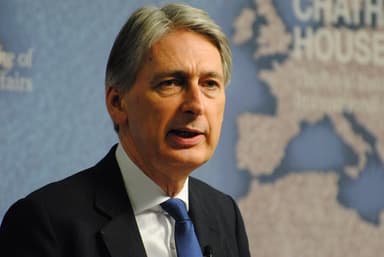
Has the Budget saved Hammond from the sack? Will it make any difference to the prospects of the Conservative Party? Simon Rose is joined by PWC’s senior economist, Andrew Sentance; Tim Evans, professor of business and political economy at Middlesex University; and financial commentator Ed Bowsher.
Guests: Andrew Sentance,Tim Evans,Ed Bowsher
Published:

Housing: Can the Chancellor’s measures make much difference, particularly to those hoping to get onto the housing ladder? Simon Rose is joined by PWC’s senior economist, Andrew Sentance; Tim Evans, professor of business and political economy at Middlesex University; and financial commentator Ed Bowsher. The panel discusses what they think of the Chancellor’s other measures, including those aimed at young people.
Guests: Andrew Sentance,Tim Evans,Ed Bowsher
Published:

What is the current economic outlook for the UK, given the OBR’s more pessimistic outlook for growth and productivity? Simon Rose is joined by PWC’s senior economist, Andrew Sentance; Tim Evans, professor of business and political economy at Middlesex University; and financial commentator Ed Bowsher.
Guests: Tim Evans,Andrew Sentance,Ed Bowsher
Published:

Smart investors know that risk and returns go hand in hand. But is the degree of risk you are exposed to appropriate for your time of life and investment goals? In his latest Money Talks podcast, Nigel Cassidy talks risk with Prof. Janette Rutterford of the Open University Business School, and David Miller, executive director and award-winning fund manager at Quilter Cheviot. Nigel discovers that financial risk covers far more eventualities than being defrauded or the impact of any future market meltdown. But equally, it seems just following your personal inclinations could make you overcautious with your investment decisions -- and seriously harm your future wealth.
Guests: Prof. Janette Rutterford,David Miller
Published:
