Original Broadcast: Thought for the Week

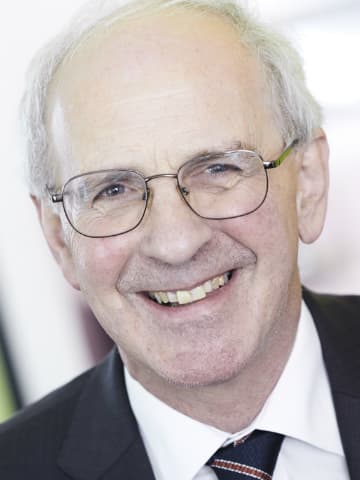
Not surprisingly, the proposal from Gary Lineker and his millionaire colleagues for a wealth tax has been met with ridicule — Robert Colvile writing in the Sunday Times says, 'The problem isn't that those who've signed the pledge are hypocrites. It's that they're idiots'. However, there is an alternative approach which could bypass gargantuan Government spending. Donating the equivalent sum to a charity of the philanthropist's choice would enable targeted support based on their analysis of need. This could provide a direct solution for the challenge of inter-generational rebalancing so that future generations are better placed to tackle national debt and future public sector payment obligations, which now exceed £9 trillion. Background music: 'Intellect' by Yung Logos
Published:
Original Broadcast: This is Money
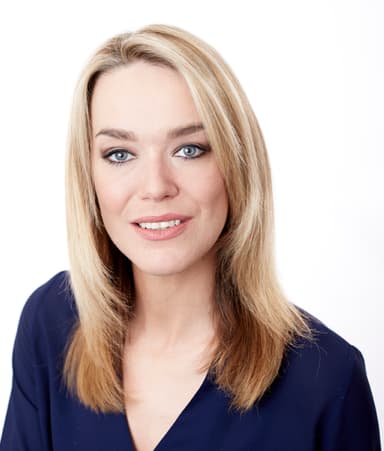
A raft of new initiatives have been released by our new prime minister last week, covering pubs, buses and electricity bills: is this all part of a radical plan, or just more tinkering? And how do we pay for it? Budgeting for defence spending is also clearly a big issue going forward, so what does new Chancellor John Healey have in store for us?
Published:
Original Broadcast: Motley Fool Show
Alphabet’s stock is down double digits this week after the company reported negative free cash flow in the second quarter. We discuss what that means for big tech, neoclouds, and the entire supply chain. Plus, we get to Tesla’s earnings and the stocks on our radar. Travis Hoium, Lou Whiteman, and Jason Hall discuss Alphabet’s free cash flow, who blinks?, Tesla’s Stock Drop, the price is right, Intel’s earnings, and stocks on our radar. Companies discussed: BBB Foods (TBBB), Booz Allen Hamilton (BAH), Alphabet (GOOG), Microsoft (MSFT), Meta (META), Amazon (AMZN), Taiwan Semiconductor (TSM), Tesla (TSLA), SpaceX (SPCX), General Motors (GM), Lyft (LYFT), Hims & Hers (HIMS), Palantir (PLTR). Host — Travis Hoium; Guests — Lou Whiteman, Jason Hall.
Guests: Lou Whiteman,Jason Hall
Published:
Original Broadcast: Motley Fool Show
Spain is the new soccer world champ, but Kalshi was also a winner from the World Cup as it added three million new users. Jon, Matt, and Rachel discuss the state of the predictions market and explain how predicting the outcome of an event is fundamentally different than investing in a stock. The team then moves into discussing how China’s Kimi K3 AI model could be disruptive to some companies and provide a tailwind for others. And the show closes with a mailbag question about digital advertising.Jon Quast, Matt Frankel, and Rachel Warren discuss the World Cup drove adoption of prediction markets, the difference between investing and gambling, how China’s Kimi K3 model could disrupt the AI space, and whether Nvidia stock could be a hidden beneficiary. Also, mailbag: the outlook for digital advertising. Companies discussed: Kalshi, DraftKings (DKNG), Flutter Entertainment (FLUT), Meta Platforms (META), Anthropic, OpenAI, Nvidia (NVDA), Alphabet (GOOG)(GOOGL). Host: Jon Quast Guests: Matt Frankel, Rachel Warren.
Guests: Matt Frankel,Rachel Warren
Published:
Original Broadcast: Modern Mindset

The summer can be truly exciting for families, with lots of extra time together and travel on the cards. But what about those operating from a two-house co-parenting model? Alternative parenting arrangements such as these can experience friction, disagreements, and even further dysfunction down the line. Joining Rory McGowan to discuss some new research exploring the issue is Daniel Ryan, a Family Law Solicitor.
Guests: Daniel Ryan
Published:
Original Broadcast: The Hypnotist

Here's an intriguing episode — following the medical resolution of a client's serious brain aneurism, Adam Cox seeks to help someone experiencing recurrent side effects of spells of dizziness: albeit very temporary in contrast to their original problem. He seeks to reframe these experiences by positioning them as cheeky rascals, more playful than destructive, in order to limit their ability to disrupt life going forward.
Published:
Original Broadcast: Gadgets and Gizmos

Despite the warm weather, Steve Caplin is not tempted by the Japanese human fridge in which overheated people can cool down for a mere £7,000. Nor is he inclined to shell out for the first mass-produced humanoid robot, a Chinese product, which looks either like something from a Kpop band or a sex doll. And while he is impressed by the video of an invisible drone, he wonders if they've considered how to use a camera with it. Cyborg cockroaches can now go underwater wearing a diving suit. ChatGPT has escaped from a sandbox and broken into a rival's system. There's a puzzling crowdfunded folding pry bar that goes ting and can open bottles while a podcast microphone is more impressive. Amazon Web Services has been glitchy and charging small users upwards of £5 billion. And the University of Sheffield is trying to grow salad, mustard, tomatoes and the like half a mile down an old coal mine.
Guests: Steve Caplin
Published:
Original Broadcast: The Business Of Film

James Cameron-Wilson says that #1 The Odyssey helped box office soar 86% despite hot weather and The World Cup. However, opinions are divided. Those who have seen it on IMAX (where it broke records) think it a masterpiece. Those who have viewed it on ordinary screens are less convinced. In his normal multiplex James found the music irritating, the dialogue sometimes unintelligible, the picture very dark and the many starry cameos distracting. Puzzled by a 15 certificate for such a mild and unbloody film, he often had no idea what was going on and believed none of it. He was far happier with Heartstopper Forever, the Netflix feature film based on its TV series which he really enjoyed and thought surprisingly touching. Not so Enola Holmes 3 with Milly Bobby Brown which, after two outings that he loved, feels like a mediocre TV episode.
Guests: James Cameron-Wilson
Published:
Original Broadcast: Thought for the Week
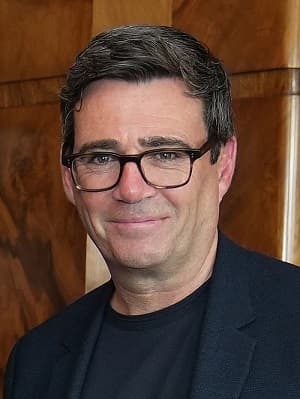
Thomas Jefferson's claim that all are created equal with the rights of life, liberty and the pursuit of happiness attracts lip service from politicians but not much commitment: they either want to take away liberty in the pursuit of equality, or to deny that wealth polarisation results from the black hole of economics. Will Andy Burnham also turn a Nelsonian blind eye to this challenge, allowing domestic parochialism to take precedence over the search for a new way forward where all can enjoy the benefits of individual freedom and economic empowerment — a genuinely new political and economic model? Background music: 'Hopeful Freedom' by Asher Fulero
Published:
Original Broadcast: This is Money
The rise in the state pension age looks likely to speed up again, as it was revealed this week that the Government has already been banking the gains.It is now almost certain that the state pension age will rise to 68 between 2037 and 2039, seven years earlier than the official timetable. But will it have to go up again and when? And is a further rise fair when life expectancy has stalled and it's the triple lock that's driving up costs? Georgie Frost, Lee Boyce and Simon Lambert discuss the state pension, when you might get it and whether it's time for a rethink. Plus, how can you bridge the gap if you want to retire earlier by saving more yourself? Simon also explains how you can track down any old work pensions and get them working much harder for you. Lee discusses why it is taking so long to buy and sell homes, and what can be done. And finally, in the week that SpaceX shares slipped below their IPO price, Simon reveals that he did what he said he was going to do, and he spent his IPO profits on a weekend away — but how much extra did he have to chip in?
Published:
