
Original Broadcast: Motley Fool Show

Tech stocks have dropped this week as earnings have given investors reason for concern. IBM left a lot to be desired and Netflix dragged on the market as well. We make sense of it all and give you the stocks on our radar.Travis Hoium, Lou Whiteman, and Emily Flippen discuss tech crashing, what we’re watching, Netflix earnings, history of tech, and Gemini delayed. Also, stocks on our radar. Companies discussed: TransDigm (TDG), Uber (UBER), Alphabet (GOOG, GOOGL), Micron (MU), Netflix (NFLX). Host — Travis Hoium; Guests — Lou Whiteman, Emily Flippen.
Guests: Emily Flippen,Lou Whiteman
Published:
Original Broadcast: Motley Fool Show
Shares of Uber are right about where they were a little over two years ago. The company has been grappling with how to navigate the world of robotaxis. One way is to lean into delivery services, and that’s why the company announced the acquisition of Delivery Hero today for $14.8 billion. Matt, Jon, And Tyler discuss Uber’s reasons for doing this now and whether a push into delivery can fend of the challenges from robotaxis. Plus, GE Aerospace’s having a hard time sourcing materials and whether emerging industries are worth betting on now. Tyler Crowe, Matt Frankel, and Jon Quast discuss Uber’s acquisition of Delivery Hero, how “sticky” are ridesharing apps, GE Aerospace’s earnings, and can AI infrastructure cause supply chain headaches for others? Also, mailbag: how to view emerging industries & technologies. Companies discussed: UBER, DASH, GOOGL, GE, GEV, TMC. Host — Tyler Crowe; Guests — Matt Frankel, Jon Quast.
Guests: Matt Frankel,Jon Quast
Published:
Original Broadcast: The Financial Outlook for Personal Investors
If you'd like to help a child, grandchild, or other young person get started investing, you have a few options when it comes to the type of account to open. Starting this month, a new option is available: Trump Accounts. Fools Robert Brokamp and Joel O’Leary discuss the details, pros, and cons. Topics covered: eligibility and contribution limits for Trump Accounts, the tax advantages, including potentially converting them to Roth accounts, the drawbacks, limitations, and potential penalties if money is withdrawn before age 59 1/2. Also, the best use cases for Trump Accounts, and other types of accounts that might be more appropriate for the youngsters in your life. Host — Robert Brokamp; Guest — Joel O’Leary.
Guests: Joel O’Leary
Published:

Original Broadcast: Modern Mindset
With a review of unmarried couples’ inheritance rights announced by the government, new research has revealed widespread confusion about what the current law actually says. Luckily, I’ve got the perfect guest to clear this up, though: Chief Legal Officer of Simpler Law, Helen Claydon, joins Rory McGowan to discuss.
Guests: Helen Claydon
Published:


This episode is all about love, intimacy and connection, and lifting them to new levels in order to reverse the drifting that can occur with familarity. Reaching back into those early memories and refreshing them can help you find that same harmony and passion going forward.
Published:

Original Broadcast: Gadgets and Gizmos

Steve Caplin laments the passing of Long Wave radio. He can't wait while a new robot makes a bed so slowly and is nervous about a pair of robots performing live surgery. British Airways is to use bionic baggage handlers. Scientists can now produce lab-grown sperm in artificial testicles taken from skin cells. A French company is producing portable disaster-proof shelters while an American one will lower your home into the ground in the event of a catastrophe. There's a robot which will clean your barbecue. And it turns out robots are much better at proving they are human than humans are.
Guests: Steve Caplin
Published:
Original Broadcast: The Business Of Film

James Cameron-Wilson says that cinemas are suffering from the heat, Wimbledon and the World Cup with box office down 31%. He wasn't keen on #1, the live action version of Moana which lacks magic and mostly feels like a cartoon. Although it's not for everyone, he was more interested in #23, Rosebush Pruning, a black comedy about a family with an abundance of problems on a country estate with the likes of Jamie Bell, Callum Turner and Elle Fanning. It's a curate's egg with no narrative thrust. As it is shocking and nasty in places, it's not one for gentle souls. His highlight of the week is the Blu-Ray release of Oh! What a Lovely War, Richard Attenborough's directorial debut. A musical satire of the First World War with an amazing star cast, it holds up remarkably well.
Guests: James Cameron-Wilson
Published:

Original Broadcast: Thought for the Week
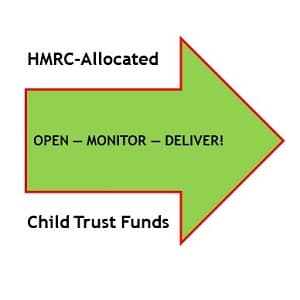
The wish to tackle inter-generational rebalancing — to break the cycle of deprivation — leads directly to establishing long-term savings accounts for disadvantaged young people: that's why the Child Trust Fund included an HMRC-allocated category for those children (mainly low-income) whose families didn't open accounts. However Government needs to not only open these accounts but also monitor and take steps to deliver them in order to ensure that these young adults actually receive the resources they need in order tob achieve their potential in adult life. A parliamentary event is taking place on 15th July, asking Andy Burnham to prioritise this. Background music: 'Not Forgotten' by Dan Lebowitz
Published:

Original Broadcast: This is Money

Twice as many households could be forced to pay a new 'mansion tax', latest speculation suggests — the threshold may fall from £2 million to £1.5 million. That rumour comes with Andy Burnham expected to be Prime Minister before the end of the month. So, exactly who will be affected, which regions are most at risk and is the High Value Council Tax Surcharge fair? Georgie Frost and Lee Boyce discuss as more middle-class homeowners potentially face an annual bill, which won't be ring-fenced for local services. Also, the scourge of cowboy builders — trust in traders falls as millions grappled with shoddy home repairs in the past 18 months. How can you find a good tradesperson, and what are your rights if things go wrong? NS&I is in panic mode, as it is far below the amount required to meet its financial targets. As such, it has boosted rates across all products since April. Which ones should you open and which should you avoid?And lastly, the tricks to get you into VIP airport lounges for less this summer — even if you've booked economy.
Guests: Lee Boyce
Published:
Original Broadcast: The Business Of Film

James Cameron-Wilson reluctantly returns for more of those yellow mischief-makers in #2's 'Minions & Monsters', which provides kids with a quick snapshot of early film history and little else of value. He raves about the third film in the chart, Olivia Wilde's chamber drama 'The Invite', which he says is distinguished by Wilde's direction, terrific performances and an enormously witty screenplay from Will McCormack and Rashida Jones. James also covers StudioCanal's 4K UHD Blu-ray release of Russell Mulcahy's 1986 film 'Highlander', which arrived on the 29th June and celebrates the film's 40th anniversary.
Guests: Chad Kennerk,James Cameron-Wilson
Published:
